

The “Slow Longevity” Strategies This Doctor Learned From 100-Year-Olds
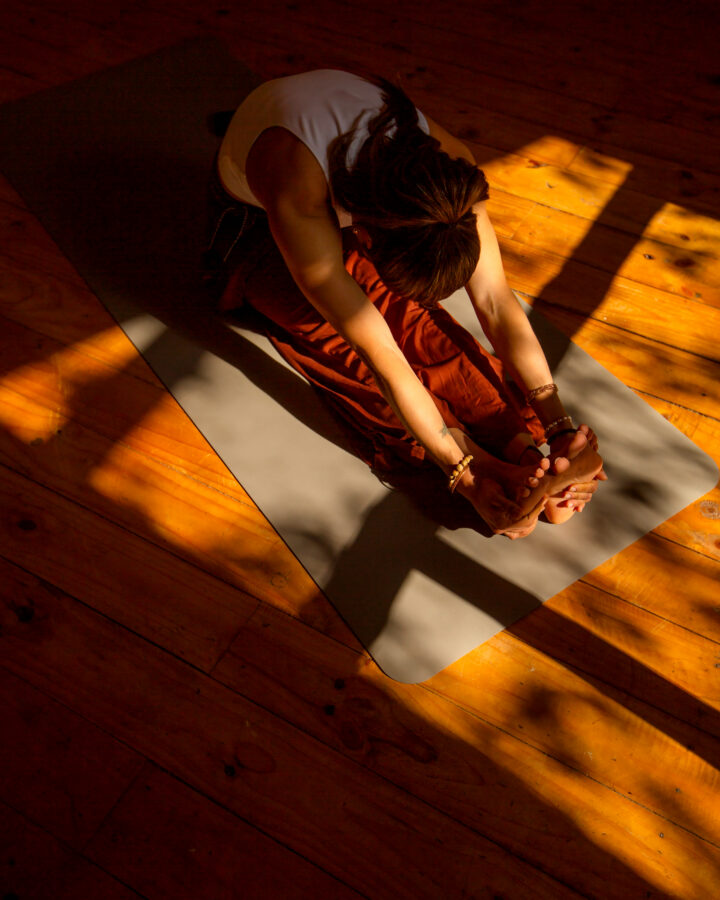
Neelam Misra, MD, helps older adults get back on their feet after disease, injury, and surgery. She’ll test their slow-and-steady secrets as a Founding Athlete at the Super Age Games.
People who exercise the most tend to live the longest, healthiest lives. That’s been established in large research studies. But Neelam Misra, MD, has also seen it in her medical practice. Working with older patients to restore function after major medical events like strokes, heart attacks, surgery, and injury, the Austin physiatrist says that those who move the most stay the most independent in the long run.
Misra remembers one centenarian patient who had fractured her leg. When she was presented with the option of a bedside commode to make recovery easier, she balked.
“She said, ‘I won’t be doing that. I’ll be walking to the bathroom, thank you very much,’” Misra recalls. It wasn’t because the patient was defiant, she tells Super Age. It was because she’d built a foundation that let her keep going: “She exercised three times per week for the past 60 or 70 years.”
This is the part of the article where you’d usually learn that the subject has fallen in love with exercise in all its forms. But here’s something some Super Age readers might find relatable: For 53-year-old Misra, that’s not the case.
Misra’s busy raising four kids, and works at two different hospitals, as well as in private practice. She’s recovering from a knee injury that has kept her from running. And sometimes, she says, workouts just aren’t fun.
But [lon-jev-i-tee]nounLiving a long life; influenced by genetics, environment, and lifestyle.Learn More: Longevity, she says, “is about giving your body a chance, and really investing in it… so I’m going to force myself to get a really good audiobook, and just do it.”
Like her medical practice, it’s become part of a holistic approach to caring for her “future self.” And that’s what sparked her interest in the Super Age Games, too: The event, she says, wouldn’t just measure physical prowess, but aging of the whole person. To invest in herself (and her future self), she became a Founding Athlete.
Caring for Her Future Self with a “Slow Medicine” Approach
When she was a medical resident on Long Island, Misra had an opportunity to work on a pain management study with patients recovering from spinal cord injuries. In the study, the patients were invited to participate in sessions with Tibetan singing bowls, where practitioners vibrate metal bowls to create a therapeutic soundscape while patients lie still.
“The first week, I was begging them to come… and I was just dragging them in,” she says. “By the second week, they were waiting in the room, asking when it was going to start.”
This experience, along with experiences with music therapy and other non-traditional pain management remedies, helped Misra develop her hybrid practice, where she combines Western medicinal practices with acupuncture, sound bowl therapy, functional medicine testing, and Ayurvedic practices. When there’s an acute problem, she says, the need-it-now urgency of Western pharmaceuticals and medicine are right for instant relief. But after that, there’s a slow build back to function, a practice she calls “slow medicine.”
“Traditional medicine is excellent in acute situations, because if someone’s having a stroke or heart attack, the way to treat those things is almost the same in every single person… and time is of the essence,” she says. “Once that acute fire alarm has been taken care of, there may be chronic, residual effects, and those are the ones that would do well with a more measured pace.”
It’s an approach she’s adopted on her own path to maintaining function. For Misra, healthy aging is built on four pillars: Diet, exercise, stress relief, and sleep.
“You can’t control the future. But you can at least set yourself up so that, if and when things happen, you have a really strong foundation,” she says. “I can take these steps to ensure that whatever happens, I will have the best possible outcome because I’m taking care of myself now for that future 70- or 80-year old.”
Her husband has gone all in on taking care of his future self. Seeing people in their family lose function, he became an exercise fanatic, losing 30 pounds, pounding out pistol squats and handstand pushups, and participating in multiple Hyrox events.
Misra has seen his transformation, but with her harried home and work schedules, she’s sticking to what her practice has taught her: Take it slow. Do the small stuff. And know that with a little persistence, it will add up. She’s added more protein to her vegetarian diet, piling chickpeas onto any dish she can, and adding more cottage cheese and lentils to her diet in her quest for 90 daily grams of the muscle-building macronutrient. She’s also fallen in love with a high-protein bowl of matcha overnight oats.
The doctor knows she also needs a prescription for exercise: “I’ve seen in my practice, those who have exercised a lot really do much better.”
She’s embraced short-burst exercise snacks, performing balance exercises and stretches throughout the day. She takes [strength tray-ning]nounResistance-based exercise to build muscle and support healthy aging.Learn More: Strength Training classes several times per week. And she’s committed to lower-intensity cardio, doing a “10-3-30” treadmill workout almost every day. In this workout, she’ll walk at 3 mph set to a 10 percent incline for 30 minutes. In a January 2025 study on a similar workout, 12-3-30, scientists found that this regimen burned 40 percent fat, compared with 33 percent for a run that burned the same number of calories.
The daily treadmill trek builds her aerobic base and slow-twitch muscle fibers, but in her words, “it’s boring.” So she tunes in an audiobook to keep herself climbing.
Testing Complete Longevity with the Super Age Games
When Misra’s husband tried to get her to toe the line for a Hyrox fitness race, she offered an alternative that was more her style: The Super Age Games.
“It’s more than just about physical prowess,” she says. “There are other metrics that are being looked at aside from that.”
She says she hopes to excel at some of those “other” metrics, like cognitive function, relational capacity, and balance. But she’s also working on the “physical prowess” parts: She’s hanging from a bar each day for 60 seconds, and committing to more strength work. With a meniscus injury that keeps her from running, she’s worried that she’ll struggle in the [vee-oh-too maks]nounA measurement of how much oxygen your body can use during exercise.Learn More: VO2 Max and endurance trials. So she’s tackling the challenge with more hill work, and more audiobooks.
“For me, ‘aging’ maybe makes sense. But ‘old’ — what does that mean?” she asks. “It’s either keep moving forward, or don’t live at all… Your age doesn’t have to define your abilities in any way.”
Read This Next:
The information provided in this article is for educational and informational purposes only and is not intended as health, medical, or financial advice. Do not use this information to diagnose or treat any health condition. Always consult a qualified healthcare provider regarding any questions you may have about a medical condition or health objectives. Read our disclaimers.
Written By:
