

This “O.G.” Longevity Doc Wants You to Experiment on Yourself
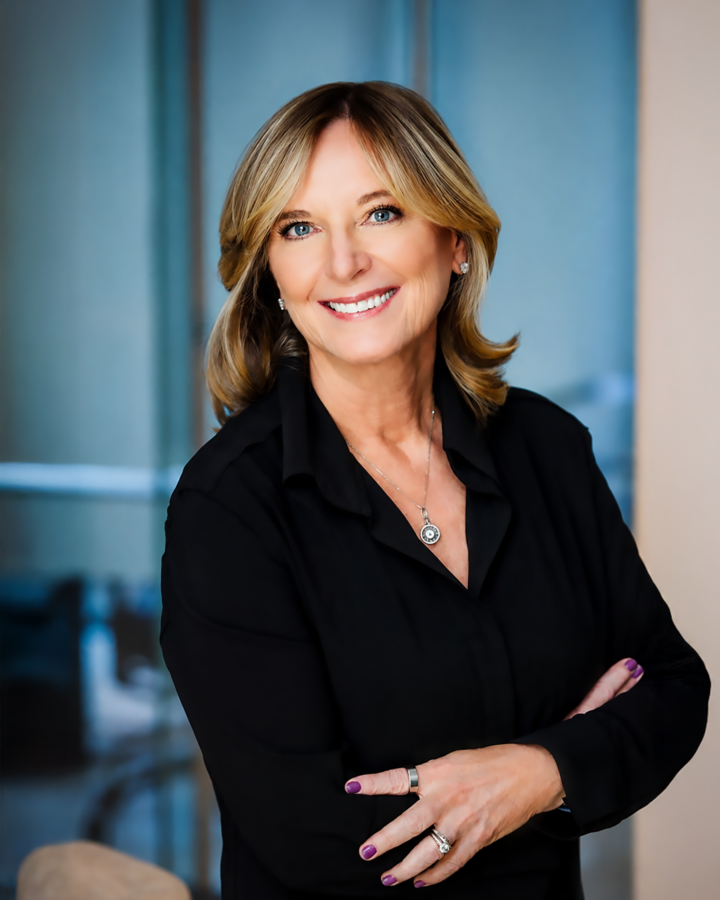
Florence Comite, MD, has run a [lon-jev-i-tee]nounLiving a long life; influenced by genetics, environment, and lifestyle.Learn More: Longevity practice since 2005. She’ll put decades of research to the test as a Founding Athlete at the Super Age Games.
As the trillion-dollar longevity industry continues to boom, doctors are focusing on prevention and patients are laser-focused on lab results and biomarkers that predict their future [helth-span]nounThe number of years you live in good health, free from chronic illness or disability.Learn More: Healthspan. They’re all just catching up to Florence Comite, MD.
“I’m the O.G. in the field,” she says. And she’s not kidding: The former Yale professor opened her longevity-focused practice, the Comite Center for Precision Medicine and Healthy Longevity, in 2005. There, she’s focused on individually-focused testing, medicine and prevention to help patients live longer and stay vital.
Comite has been putting her patients through the paces of longevity biomarkers like [grip strength]nounA key marker of strength and predictor of longevity.Learn More: Grip Strength and [vee-oh-too maks]nounA measurement of how much oxygen your body can use during exercise.Learn More: VO2 Max for decades. And she’s been experimenting with them on herself, too, putting her “N of 1” approach to personalized medicine to work in her own life.
“The more data I know about myself and the people I care for as patients and my family,” she says, “the more I can guide choices that are rational.”
In November, Comite will put all that self-research to the test as a Founding Athlete at the Super Age Games. And she won’t be doing it alone: Just as she does in her practice, Comite is bringing her fellow physicians and her patients along as a team.
Building the Vitality to Keep Dancing at 103
A few years ago, a patient’s “regular” doctor was furious with Comite.
The patient had a prostate issue, and his doctor was upset that Dr. Comite had the patient working with an exercise physiologist in addition to normal care.
“The patient couldn’t describe it really well, so it sounded a little bizarre. The [doctor] called me and was really upset… he was going to report me to a morbidity and mortality conference,” she says. “And I said, ‘why don’t you come visit?’”
He did. And he was impressed. The doctor asked how long she’d been doing this kind of exercise intervention with patients. (The answer: about 20 years.)
“He said, ‘well, you’re way ahead of us, because we just started looking for someone to run our exercise physiology lab, because we think it prevents cancer.’ So then, we became best buds.”
Dr. Comite’s thinking has long been ahead of the curve. And throughout her decades of experimenting, she says, she’s been obsessed with measuring, just as she was when training at the National Institutes of Health.
“The most important thing to me is data,” she says. If she can measure it, she can see if interventions change it, and keep patients out of the danger zone, as well as the gray area of a “normal” range.
“Being ‘OK’ and ‘in the normal range’ is a dangerous set of words, because the normal range is based on a sick population and averages. It’s one-size-fits-all,” Dr. Comite explains. “Being optimal means you’re achieving the best your body and system can be.” And that, she says, is the goal.
To optimize her own system, Dr. Comite experiments to find her own personal data: A few years ago, she did a series of therapeutic plasma exchange treatments, swapping out senescent, “zombie” cells in her system for fresh, vital ones with each transfusion.
The results, she said, were astounding: Her biological age decreased by 15 years. But the fancy treatment couldn’t confound the basics: When she skimped on sleep for three months, the positive results disappeared.
When applying this knowledge to her patients, experiments like these aren’t just about the data, she says. Dr. Comite’s view of longevity isn’t a “bio age” on a scoreboard, but about what someone can do with it.
“Joy is what we live life to experience. You know, who wants to sit around for the rest of their life dwindling and getting frail and bent over a walker because they have osteoporosis and [hahrt dih-zeez]nounConditions affecting heart health and circulation.Learn More: Heart Disease, or they’ve had a stroke, so they can’t move? This is what we want to stop,” she says. “Vitality is what longevity means to me. It’s about keeping your health — feeling fantastic and dancing at your great-great-granddaughter’s wedding at 103.”
Dr. Florence Comite’s Prescription for Long-Term Health
While she’ll experiment with plasma exchange and other protocols, Dr. Comite’s quest to be vital into her triple-digit years is built on the basics. Here’s what that looks like in practice.
1. Protect Your Sleep
It’s the habit she credits with keeping her age numbers down, and the foundation everything else rests on.
2. Build Your Diet Around Protein
No elaborate protocols here. Her plate prioritizes protein, full stop.
3. Strength Train Three Times a Week
She works with a trainer, and that consistency has kept her at 15 percent body fat.
4. Find Your Accountability Community
“In my younger days, I would like to just do everything myself,” she says. But when she moved from Connecticut to New York years ago, she started joining teams, and that kept her motivated: “You might not feel up to something on a certain day. Joining teams was fun because you had class teammates and friends who would cheer you on.”
That’s why she hasn’t just signed up for the Super Age Games as a Founding Athlete. She’s bringing a team along, too. The Games will give her a chance to see how her decades of self-experimentation, and the recommendations she’s given to her teammates, work in practice.
5. Train Your Balance
Even with all those years of foundational work, Dr. Comite is prepping specifically for the Games, putting extra focus on balance, which she already trains through a regular yoga practice.
6. Give Your Brain a Workout
She’s intrigued by the NeuroTracker cognitive examination. The accompanying training program, which helps users keep track of multiple things happening simultaneously, is available to all Games participants.
7. Invest In Your Health Like It’s Your 401(k)
Those little investments are at the core of her strategy for lasting vitality. “Everyone thinks it’s inevitable that you decline, but it’s not inevitable if you invest in it,” she says. “Just like you invest money in your 401(k), investing early and keeping it up, to me, is the goal. That’s the best goal you can have.”
Read This Next:
The information provided in this article is for educational and informational purposes only and is not intended as health, medical, or financial advice. Do not use this information to diagnose or treat any health condition. Always consult a qualified healthcare provider regarding any questions you may have about a medical condition or health objectives. Read our disclaimers.
Written By:
