

6 Things Your Skin Is Trying to Tell You
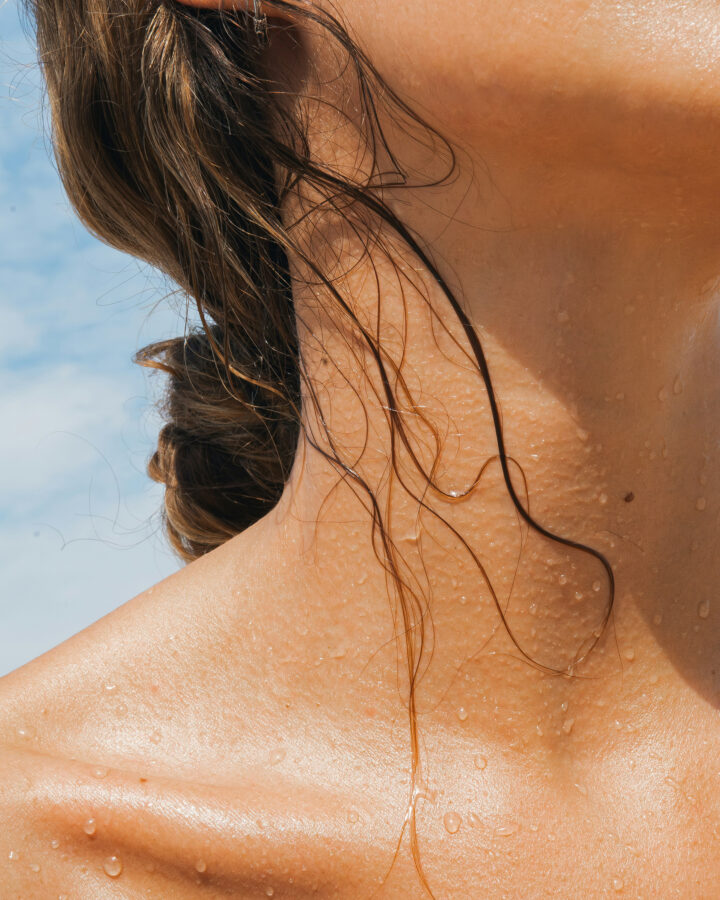
What’s going on inside your body can wind up written all over your face (and arms and back and legs). Here’s how to read the health signals on your skin.
Your skin may not be see-through, but taking a look at the outside can give you a peek at what’s happening underneath.
“I like to call the skin a window into internal health,” says Fatima Bawany, MD, a dermatologist in Connecticut and a Founding Athlete at the upcoming Super Age Games. “It shows us types of aging processes that are driven by genetics, and also things that are driven by our environment and our lifestyle choices.”
Your skin may flag certain diseases and conditions: A cheek rash that looks like a butterfly can signal someone has lupus. A 45-degree crease in the skin of your earlobe could be “Frank’s sign,” an indicator of coronary artery disease. Certain skin discolorations can be indicative of metabolic health issues. But the condition of your skin, and how it functions, is also illustrative of the general health of your body inside, says Daniel Gould, MD, PhD, a board certified plastic surgeon in Beverly Hills.
“For instance, where there’s liver disease or poor liver health, there can be changes in the color of the skin,” he says. “Your skin reflects all of the potential [in-fluh-mey-shuhn]nounYour body’s response to an illness, injury or something that doesn’t belong in your body (like germs or toxic chemicals).Learn More: Inflammation that’s going on in the body, the chronic disease risks, the other risks.”
6 Things Your Skin Is Trying to Tell You
Your skin’s appearance can even tell you how you’re aging. The idea that you “look older than you are”? That’s real science, says Michael Christopher, MD, a board-certified dermatologist.
“There was a Danish study that looked at over 1800 twins over 10 years, and the twins that looked older — it’s called ‘perceived age’ — died earlier than the twin that looked younger,” he says. The twins’ perceived age, or how “old” they looked, also correlated with other markers of aging. “If they ‘looked’ older than their age-matched peer who was their twin, they had worse [grip strength]nounA key marker of strength and predictor of longevity.Learn More: Grip Strength. They had shorter telomere length [a sign of aging].”
Much of the difference in the aging quality of these twins had a predictable source: UV radiation. After all, sun exposure accounts for up to 80 percent of skin aging, studies show. But that leaves a whole 20 percent that can be impacted by other factors, some of them internal. Here’s a primer on how to speak your skin’s language, including a few health matters your skin might be flagging, the signs to look for, and when to talk to your doctor.
1) Increased Hair Shedding = Your Nutrition’s Lagging
Hair loss can be genetic, a byproduct of stress, or related to aging. But it can also be indicative of internal processes, Bawany says.
“I saw a patient who had been dealing with hair shedding for months. We ran labs, we found that his [vai-tuh-min dee]nounA vitamin essential for bone health and immune function.Learn More: Vitamin D ended up being really low,” she says. “So we supplemented, got the levels back to normal, and the shedding improved significantly.”
Shedding can also indicate issues with low iron, she says, or could be indicative of thyroid problems.
What you eat can also impact your skin’s appearance. In studies of Caucasian skin, people who eat more fruits and vegetables tend to have more yellow undertones in their skin, which the researchers note is often perceived as more attractive and healthy. The changes don’t take long: In one study, it took just six weeks of healthier eating to see improvements. Eating 2.9 portions of vegetables per day improved the “healthiness” of skin, and 3.3 portions made skin noticeably increase in “attractiveness.”
2) Redness, Rosacea, Psoriasis, and Eczema = There’s a Lot of Inflammation In Your Body
Your body needs some inflammation: It’s how your immune system responds when there’s injury or illness in the body. But when the inflammation engine stays turned on all the time due to persistent stressors, low-grade chronic inflammation can start to take hold. Also called “inflammaging,” this chronic inflammation is related to elevated risks for chronic diseases like diabetes, [hahrt dih-zeez]nounConditions affecting heart health and circulation.Learn More: Heart Disease, and Alzheimer’s.
And it shows up on our skin, Gould says: Excessive skin redness or rosacea can be traced back to inflammation.
Skin inflammation can also contribute to a cycle that increased your risks for other diseases, Christopher says. Here’s what he means: Inflammation in the body, from environmental factors like pollution, or lifestyle factors like smoking, poor diet, or obesity, can trigger immune-related, inflammatory skin conditions like psoriasis or eczema. When those skin conditions become pervasive, the conditions themselves can result in more inflammation back in your body.
“Having greater than 10 percent of body surface area of psoriatic plaques on your skin increases systemic inflammation in your body, and is an independent risk factor for coronary artery disease,” he says. Even if the plaques don’t bother a patient, he says, they’re dealing a blow to their [lon-jev-i-tee]nounLiving a long life; influenced by genetics, environment, and lifestyle.Learn More: Longevity.
If your skin looks inflamed or has these conditions, talk to your doctor. Bawany also suggests incorporating anti-inflammatory foods, like legumes, vegetables, extra virgin olive oil, and plain yogurt into your diet.
3) Skin Is Thicker and More Elastic = Your Workout Is Working!
When someone gets in better shape, their skin looks better, Gould says. And that’s not just in your head: Both aerobic and strength workouts have been shown to improve skin elasticity and the structure of the skin itself. Exercise reduces chronic inflammation, which can help improve the appearance of skin. And [strength tray-ning]nounResistance-based exercise to build muscle and support healthy aging.Learn More: Strength Training, specifically, has been shown to increase skin thickness, which can counteract some of the natural skin thinning we experience with age.
Exercise can also improve how your skin functions, Gould says. People who are fitter start sweating sooner, and sweat more, than people who are less fit. That sounds kind of gross, but it’s an indication, Gould says, that the skin is being perfused with more blood, which can help skin heal faster from wounds.
4) Duller, Less Elastic Skin = You’re Not Getting Enough Quality Sleep
When people don’t get enough sleep, Bawany says, not only does skin look worse, it functions worse.
“People sleeping five hours or less… took longer to recover from things like UV damage. Skin was not able to retain as much moisture as people who were sleeping well,” she says. “Poor sleep has also been linked to things like hair loss, eczema, psoriasis, and acne, so a lot of [acute] skin conditions as well.”
And, of course, poor sleep is also associated with non-skin health outcomes, including lower [muh-suhl mas]nounThe total weight of muscle in your body, critical for longevity.Learn More: Muscle Mass, poorer mental health, and shorter lives. So when you “look sleepy,” you’re actually less healthy overall.
5) Changes In Hair, and Reduced Collagen = Your Hormones Are Changing
As women approach menopause and [peh-ree-men-uh-pawz]nounThe transitional period before menopause when hormonal shifts begin.Learn More: Perimenopause, some skin changes can act as a bellwether that hormonal changes are coming, Bawany says. Women can lose 30 percent of their skin collagen in the first five years of menopause, and this change can start before “the change.”
Women may also experience changes in their hair prior to perimenopause. This can result in hair loss, but also in new hair showing up, Christopher says. Increased hair on the sides of the cheeks and in the mustache area can indicate that menopause is starting before changes in the menstrual cycle kick in.
Men may experience the opposite: When testosterone reduces, so does body hair, Christopher notes. By the time we’re 80, most of our body hair will be gone. But if it starts happening sooner, it could be an indication that hormones are out of whack.
If you’re experiencing any of these symptoms, the doctors say, it’s worth talking to your physician about your hormone levels to check.
6) Excessive Skin Tags or Yellow Bumps On the Eyelids = You’re At Risk for Cardiovascular Disease
An increase in skin tags can be a sign of [in-suh-lin ri-zis-tuhns]nounA condition where cells in the muscles, fat, and liver don’t respond properly to insulin, leading to impaired insulin sensitivity and potentially prediabetes or type 2 diabetes.Learn More: Insulin Resistance, a condition where your body needs to pump out more insulin in response to a carb-heavy meal or other glucose spike than is normal; insulin resistance is associated with increased risks of Type-II diabetes and cardiovascular disease. Bawany says an increase in skin tags can also be a sign of elevated low-density lipoprotein (LDL) cholesterol, a.k.a. the “bad cholesterol” that’s associated with cardiovascular disease outcomes.
You may also have elevated cholesterol if you’ve got otherwise harmless yellow bumps on your eyelids called xanthelasma, Christopher says. They’re not always correlated, but if you have these even without high LDL, your risk profile may be worse.
“They’ve studied patients that have xanthelasmas, and looked at them over time without lipid abnormalities, and their hazard ratio was 1.48 (48 percent higher risk) compared to the standard population without the xanthelasmas in this cohort of having a heart attack,” he says.
If you’re experiencing more skin tags than usual, don’t just ignore them or get them removed, Bawany says. Talk to your doctor about this increase to look for underlying causes.
Skin Health is Health
It’s important to tend to your skin not only aesthetically, but also medically. Skin health is health, and the improvements you make now could have meaningful implications for your [helth-span]nounThe number of years you live in good health, free from chronic illness or disability.Learn More: Healthspan and longevity.
“Everything from vascular health, autoimmune conditions, nutritional deficiencies, hormonal issues, and even underlying cancers… changes you see in your skin can sometimes be very indicative of these processes,” Bawany says. And those changes may not be due to recent lifestyle choices. “The skin keeps score… sometimes when you see your peers are aging more slowly than you, it’s not necessarily choices you’re making now. It may be choices from years ago that are showing up on your skin now.”
If you’re “looking older,” then, pay attention: Tell your doctor about skin changes you’re noticing, even if you think they’re just a matter of everyday aging. They’ll know when a wrinkle isn’t just a wrinkle, and can help improve your skin health and your overall healthspan.
Read This Next:
The information provided in this article is for educational and informational purposes only and is not intended as health, medical, or financial advice. Do not use this information to diagnose or treat any health condition. Always consult a qualified healthcare provider regarding any questions you may have about a medical condition or health objectives. Read our disclaimers.
Written By:
