

Women Are Not Small Men. Here’s What That Means for Training
Павло Ярмолюк - Pexels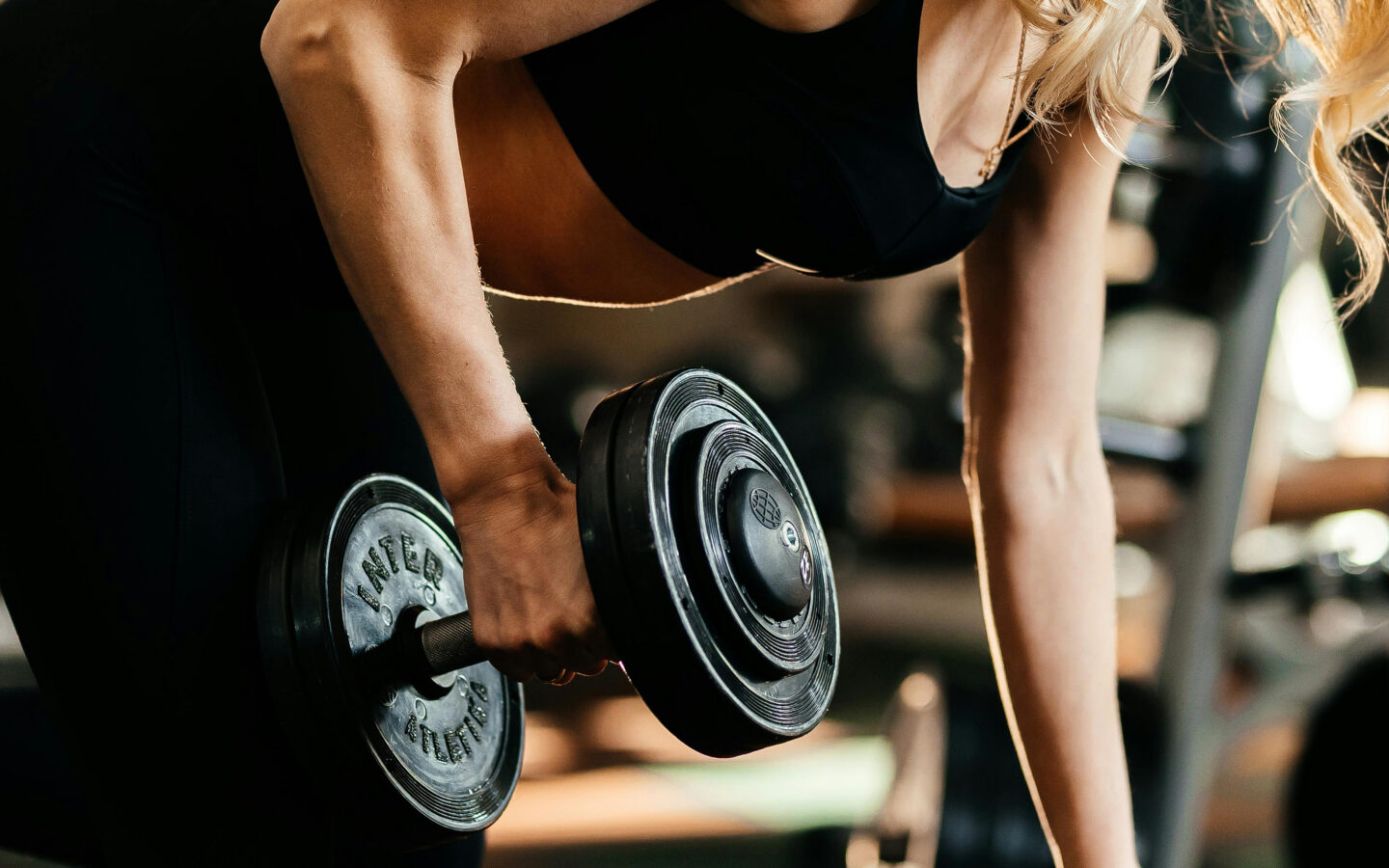
Most workouts are designed for a man’s body. Here’s what actually works for women.
Women are not small men, and their training shouldn’t look like a scaled-down version of a male protocol. The female body has its own hormonal architecture, its own relationship to muscle and bone, and its own set of signals for building strength, especially in midlife. Once you understand how those systems actually work, the path forward gets a lot clearer.
First, every woman should be building muscle and endurance. In one study, people in the bottom 20th percentile for cardiovascular fitness (as measured by [vee-oh-too maks]nounA measurement of how much oxygen your body can use during exercise.Learn More: VO2 Max) saw a fourfold increase in mortality, compared to extremely fit individuals in the top 20%. Strength had a similar impact, associated with a 250% difference in mortality between those in the upper and lower percentiles. So, let’s get moving!
Women’s Fitness Needs Are Different: How Hormones Impact Muscle and Bone Health
Estrogen is the primary anabolic (muscle-building) hormone in women. It also promotes bone-forming cells known as osteoblasts, aiding in bone strength and density. Estrogen levels peak in our 20s and 30s, fluctuate in our 40s, and drop up to 50% by age 50. During that time, women can lose:
- 3% of muscle mass per year after age 30
- 10-20% of their bone density in the first 5 years after menopause
As estrogen levels drop, muscles must rely on another “signal” to tell them to contract forcefully. Lifting heavy weights produces an intense neuro-stimulus, triggering the brain to send that information. (Women can generate similar neural signals with short bouts of high-intensity training, such as sprinting or jumping.) Similarly, the “brain-bone axis” connects the central nervous system to bone formation, metabolism, and resorption.
Fitness Myths for Women: What the Science Actually Says
Myth #1: Lifting heavy weights will make me “bulky”
First, let’s not forget that adding muscle is the point. Yet what we’ve learned is that doing fewer repetitions at a heavier weight actually builds strength over [hy-pur-truh-fee]nounThe increase in muscle size through training.Learn More: Hypertrophy. You can also mediate the “bulkiness” of muscle gain with the right diet.
Myth # 2: Movement only counts during dedicated periods of exercise
All movement matters. You can power up your day by incorporating “exercise snacks“—short bouts of physical activity peppered throughout your day. Don’t discredit swapping the elevator for the stairs, doing five air squats between calls, or taking a walking meeting — it all contributes to our well-being and lifespan.
Myth # 3: High-intensity work is “dangerous” for women
For most healthy adults, engaging in vigorous exercise is incredibly beneficial. In fact, every minute of vigorous exercise is worth four to nine minutes of more moderate activity. Not only does high-intensity exercise benefit the musculoskeletal system, it has positive effects on the brain (especially when we produce lactate, one of the brain’s preferred sources of energy). It also enhances the female metabolism, promoting the usage of glucose and improving [in-suh-lin sen-si-tiv-i-tee]nounHow effectively your body uses insulin, which regulates blood sugar levelsLearn More: Insulin Sensitivity.
Myth #4: Women only need zone 2 exercise
The promotion of 150 minutes of Zone 2 exercise — the second step on a 1-to-5 heart rate zone scale — comes from studies on men. While all movement is beneficial for women, resistance training and high-intensity training are what truly move the needle for enhancing [helth-span]nounThe number of years you live in good health, free from chronic illness or disability.Learn More: Healthspan. That said, ho ahead and embrace Zone 2 for the mental and social benefits it can provide.
[strength tray-ning]nounResistance-based exercise to build muscle and support healthy aging.Learn More: Strength Training for Women: Safe, Science-Backed, Muscle-Building Strategies
It is never too late to begin a strength training program, and “lifting heavy” does not happen overnight. Be patient and start slow. Consistency is key. Here are a few things to keep in mind as you begin strength training:
- Think six repetitions, with 2 “in reserve.” This means you should be working at such a level of intensity that by your sixth rep, you’re nearly spent— able to do two more reps if you really had to.
- Aim for 2-3 strength training sessions per week. Mayo Clinic suggests aiming for 20 to 30 minute sessions.
- Try “polarized” training 2-3 times per week. This consists of high-intensity interval training (HIIT) for 1-2 min at 80% maximum effort, followed by 30-60 seconds of recovery. Then repeat this sequence or do sprint interval training (SIT) for 30 seconds at 100% intensity, followed by 1-2 min of recovery. Repeat five times.
- There’s a role for Zone 2 exercise, but it’s not the whole story. Zone 2 is for chats with friends and is a good way to support metabolic and, social, [kog-ni-tiv helth]nounThe ability to think, learn, and remember clearly as you age, supported by brain structure, function, and lifestyle factors like sleep, diet, and exercise.Learn More: Cognitive Health. But varying your zones can be even more beneficial.
- Don’t forget moh-bil-i-tee]nounThe ability to move freely and easily through a full range of motion.Learn More: Mobility and flexibility. Women have greater muscle elasticity compared with men, due to hormonal differences and muscle structure. However, as estrogen drops, collagen and elastin decrease in the connective tissues. Make a point of building flexibility training into everyday exercises to maintain optimal mobility as your hormones shift with time.
- It’s never too late to start. But the earlier you do start, the more you access the “compound effects” of muscle building for your skeletal muscle foundation and bone density support.
See the Ultimate Guide for Building Muscle Safely after 40 for more fitness tips for women.
Two Strategies We Add to Our Fitness Routine
Yes, we will show up on a Zoom call wearing a ruck pack, and we aren’t afraid to try the weird fitness “rides” at the gym. Here are two things that have worked for us:
1. Rucking: Walking, hiking, or even doing housework with a weighted vest or backpack does two things at once: it loads your bones — which is exactly the stimulus they need to stay dense — and it trains your body to decelerate under pressure. That second part matters more than most people realize. We don’t usually fall going uphill. We fall going down, when gravity wins and our muscles aren’t ready. Rucking builds the kind of eccentric strength that teaches your body to put the brakes on — the exact skill that keeps a small stumble from becoming something worse.
2. [bluhd floh]nounThe movement of blood through the circulatory system, delivering oxygen and nutrients to organs and tissues to support energy, healing, and overall health.Learn More: Blood Flow Restriction (BFR): BFR has been around for decades, but it’s having a well-deserved moment. By using a specialized cuff or wrap to partially limit blood flow to a working muscle, you can trigger the same growth signals as heavy lifting — without the joint strain. That’s a meaningful distinction if your knees or shoulders have opinions about traditional strength training. It also boosts lactate and human growth hormone, both of which support brain health and open up additional pathways for muscle development.
Building muscle safely doesn’t mean doing less, it means working smarter. For women, resistance training takes less time as weights get heavier and reps fewer. With these strategies, you’ll stay strong, mobile, and injury-free for years to come. And to level-up, read about how to unlock the benefits of progressive overload.
Read This Next
The information provided in this article is for educational and informational purposes only and is not intended as health, medical, or financial advice. Do not use this information to diagnose or treat any health condition. Always consult a qualified healthcare provider regarding any questions you may have about a medical condition or health objectives. Read our disclaimers.
Written By:

