

One 76-Year Old’s Longevity Philosophy: “If You Can’t Do It, You Should Do It More”
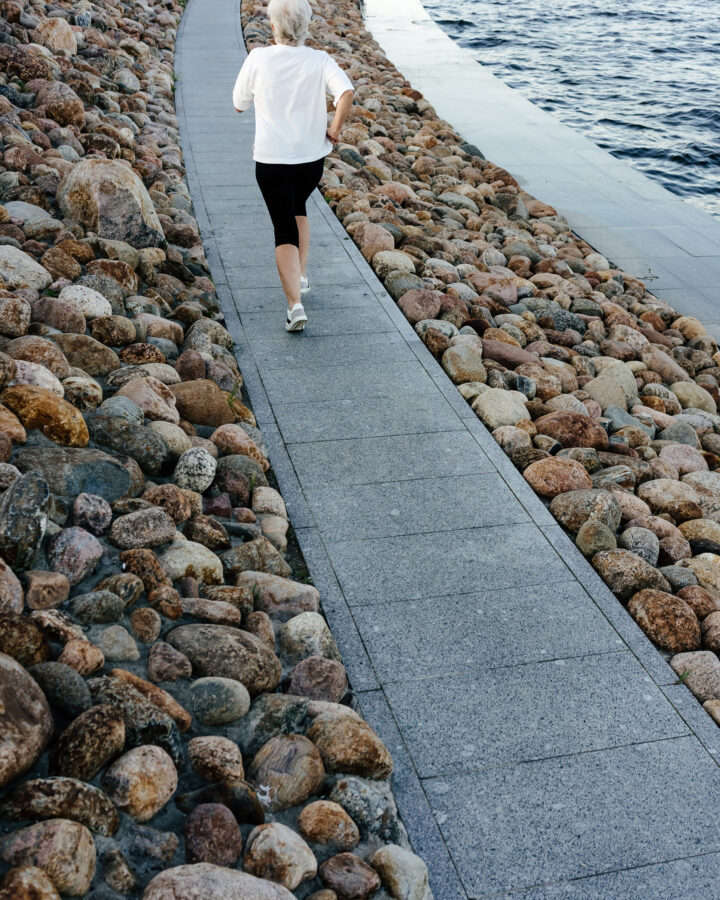
Susan Schultz, 76, has been researching senior fitness for decades. Now she’s on the cutting edge again — as the Super Age Games’ first Founding Athlete.
In a fitness world where longevity and [strength tray-ning]nounResistance-based exercise to build muscle and support healthy aging.Learn More: Strength Training are trending among older adults, Susan Schultz has been ahead of the curve for decades. Since the early ‘90s, the PhD physical educator has been dedicated to showing older people what’s possible — broadcasting her message everywhere from the halls of universities to the screens of public television in North Dakota.
“I don’t think a lot of people know what they really, at this age, can still do. It’s a lot more than what they give themselves credit for,” she tells Super Age. But increasingly, she says, people are taking charge of their health thanks to strides in research and education. “We know better now. We know what’s happening. We know what we can do to improve it.”
At 76, she’s applying that new information in service of aging powerfully, and using the Super Age Games to challenge herself to be even better. It’s just one more way that Schultz found herself ahead of the curve: When registration opened, she was the first person to sign up for November’s inaugural Games.
The Games are an opportunity, she says, to level up her own [helth-span]nounThe number of years you live in good health, free from chronic illness or disability.Learn More: Healthspan and further her mission to educate others about aging well. She plans to share her experience — both her training hurdles and her progress — to help others follow an active path, too.
A Pioneer in Elder Fitness, She’s Now Blazing a New Trail
Schultz’s road to the Super Age Games began in February. And that road was actually a parking lot.
At her retirement community in Nevada, she’s involved in theater — most recently working on a production of “Guys and Dolls.” The cast was about to take pictures on stage, but she’d forgotten part of her costume in the car.
“I needed it in the next five minutes. So from here to the parking lot, I’m thinking, ‘well, maybe I ought to jog,’” she says. “So I jogged out to the car. When I got there, I was amazed that I actually did it without stopping, and then I jogged back to the theater.”
That was the first time Schultz had really run in about a decade, she says. Those prior 10 years had been an anomaly for Schultz, who had previously worked as a physical education and health researcher and educator. (Notably, she had focused much of her work on “elderly fitness,” a term she jokingly says she’s now offended by.)
Looking back on her career, she says a lot’s changed. “The difference now is the extent and quality of the research as compared to the early ’90s,” she says.
That increase in research started with educators like Schultz. While working at Mayville State University in North Dakota (“student population: 900”) in the early 1990s, she wrote and hosted a TV show called “Sit and Get Fit,” then studied its impact on elder fitness.
“I did all kinds of exercises sitting in a chair, and North Dakota State University [partnered with us on] a research study to go along with it,” she says. The 21-episode show aired on Prairie Public TV, and was shown in the study to groups of people at six local nursing homes and senior centers. Those who participated were compared to a control group that did not perform the chair-based moves.
“One thing that always, always stuck in my mind: the people who didn’t do it declined faster [during the run of the show], and the people who did do it increased their fitness,” she says. “So anytime I catch myself sitting for long periods of time, I panic.”
But in the past decade, Schultz’s ability to be out of the chair has been compromised. While living in Angel Fire, New Mexico, where she and her husband had moved to ski more often, a steroid shot for her knee left her with sepsis. As her body recovered from the infection, she was unable to be active — or to get a needed knee surgery — for a year. Her husband also suffered a heart attack, prompting a move back to Nevada. And while she was able to become active again, participating in an American Clogging dance class several times per week, the lifelong educator felt she wasn’t living up to the personal standards she’d built her life around.
“I feel like I have been lacking in my professional duties,” she says, “by not doing anything since I retired that includes physical fitness and going out and letting people know what they can do and how much they can accomplish.”
So when she learned about the Super Age Games, Schultz immediately signed up, becoming the Games’ first-ever ticket holder and Founding Athlete.
“I wanted to do the Super Age Games, to begin with, very selfishly,” she says. “I wanted to use that as a goal to get in better shape.”
“If You Can’t Do It, Maybe You Should Do It More.”
Schultz started preparing for the Games with what she calls “the Schultz philosophy.” It’s simple, she says: “If you can’t do it, maybe you should do it more.”
It’s a mantra she built as a young volleyball athlete, digging out serve after serve on her college’s back line until no shot was too low for her to recover. And as she prepares for the Super Age Games, she’s embracing that same tactic: The first time Schultz tried hanging from a bar to test her [grip strength]nounA key marker of strength and predictor of longevity.Learn More: Grip Strength, she could barely last a moment. Six weeks later, she’s up to 8 seconds of hanging.
And she’s doing more than hanging. In addition to her twice-weekly dance practice and twice-weekly strength training, Schultz has turned her run to the car into interval training runs. Twice per week, she’ll walk for three minutes, then run for one, repeating the process six times. And on Fridays, she’s taking a kickboxing class, which she says, “kicks my butt.”
“I want to be fit so I can do the things I like to do, whether it’s downhill skiing, cross country skiing, swimming, hiking. My hobby is photography. I want to get out and take pictures of bears and birds,” she says. “Healthy longevity is having an imagination and saying, ‘I can do that.’”
Her preparation for the Games is also helping others in her community imagine their own versions of healthier aging. She’s roped her husband of 56 years into working on his bar hangs with her, and while Schultz says she didn’t intend to be an inspiration to those around her, the reactions from friends and neighbors has shown it’s happening anyway.
“I’ve gotten so much support from my friends. And one gal said, ‘You’re really an inspiration,’” she says. When Schultz tried to demur, the friend insisted, and said it again. “And I said, ‘well now I can’t quit!’”
Not only has she not quit, she’s embracing her role. Maybe not as an inspiration, but as what she’s been her whole life — an educator.
“Initially, it was very selfish because it was an incentive for me to get in shape,” she says. “I found there’s a whole community of people that will be watching what you’re doing, how you’re doing it, and what the improvements are. It has grown into such a community of supporters and individuals, that I feel somewhat obligated to say, ‘Hey, you guys need to do this next year. We’ll all do it together.’”
Read This Next:
The information provided in this article is for educational and informational purposes only and is not intended as health, medical, or financial advice. Do not use this information to diagnose or treat any health condition. Always consult a qualified healthcare provider regarding any questions you may have about a medical condition or health objectives. Read our disclaimers.
Written By:
