

How an NBA Doctor Is Building Strength and Mobility at 60
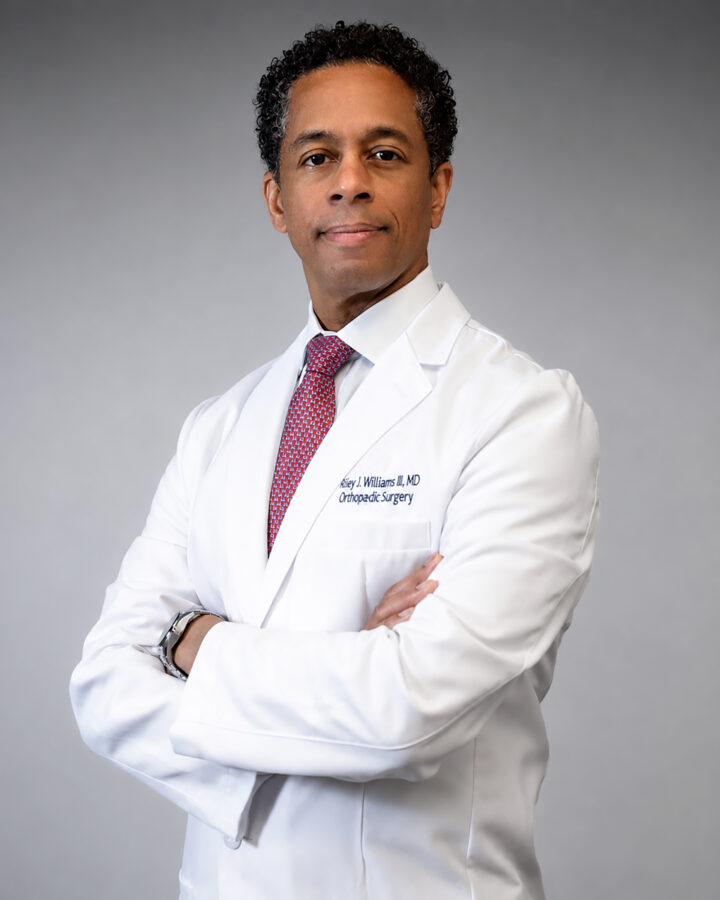
Riley Williams, MD, treats the pros and learns from them. He’ll put those lessons to the test as a Super Age Games Founding Athlete.
When LeBron James suits up for the 2026-27 NBA season, he’ll be entering his 24th year as an NBA player. And while the onetime “kid from Akron” is in many ways a basketball unicorn, his on-court [lon-jev-i-tee]nounLiving a long life; influenced by genetics, environment, and lifestyle.Learn More: Longevity is becoming more common across pro sports: Of the 12 players who have ever played 20 or more NBA seasons, four were active in the last three years.
“It was unheard of for someone like a basketball player to play for 20 years and be good,” says Riley Williams, MD, Chief of the Sports Medicine Institute at the Hospital for Special Surgery, and Medical Director for the Brooklyn Nets and New York Liberty. The good news is that it’s trickling down from the field to the fans. “The performance data, and the data we’ve gotten from our pro athletes, watching them expand their lifespans in sport, has now translated into what we doctors say in the office.”
Many of the long-term performance improvements — for All-Stars and average Joes — are thanks to medical advances and care from doctors like Williams. But for the superstars, he says, these epic, endless careers also hinge on the athletes’ habits.
“There’s a consistency of behavior, and that goes across everything: Diet. Sleep. Rest,” he says. Those same habits, he adds, can help Super Agers extend their own performance, but only if they start ASAP.
“You don’t get to 50 and decide you want to have longevity. You have to have that idea at 30. I always tell people you’re banking: You’re banking moh-bil-i-tee]nounThe ability to move freely and easily through a full range of motion.Learn More: Mobility. You’re banking cardiac output, VO2 Max. If you have a base before you get to that age, you have more reserve to start to pull on if you have an injury or illness,” the doctor tells Super Age.
Count Williams among those making deposits at the bank of longevity. With his near-daily strength training habit and limited alcohol — an idea he’s borrowed from his superstar patients — the 60-year-old surgeon has maintained the strength to still tee off from the blue tees on the golf course, and to drop into a Hyrox race with minimal training (not only finishing, but ranking within the top 10 for his age group).
His next challenge: The Super Age Games, where he’ll be a Founding Athlete.
Stay In the Game: Focus on Being Strong and Mobile
Over the past 10 years, Williams has been focused on adding something new to his longevity bank: mobility.
“Mobility is definitely something that needs to be top of mind, because that’s what I see in the office,” he says. “People are strong, but they’re kind of stiff. They can’t move. And that has a downstream effect on what they can do from an athletic standpoint.”
Williams didn’t want to join the parade of stiffs, so he spent his 50s (and now early 60s) doing seven to 10 minutes of mobility work before each workout. It’s nothing fancy or complicated. He does some repetitions of the world’s greatest stretch (a combination lunge with torso twist), as well as bodyweight versions of strength movements: He’ll knock out 50 air squats, 50 lunges, do some bodyweight squat thrusts (like burpees without the pushup), plus some jumping jacks to move his joints through their full ranges of motion.
Those types of exercises can be just as good for mobility as what we think of as “flexibility work”: In a research review of 11 studies, scientists found that people who did strength training work through a full range of motion saw similar improvements in joint range of motion as others who did stretching routines.
Williams’ mobility work, though, is a prelude to the star attraction of his routine: His focus on continued strength building and muscle banking.
“I love to lift,” he says. “It’s my jam.”
Five to seven days per week, Williams lifts heavy, doing full-body sessions with 2-3 sets per exercise. To make sure he’s maximizing strength, the surgeon keeps his rep ranges lower. He takes each set to failure, stopping only when he can’t do another rep with good form.
And like his athletes, he’s focused on keeping his strength workouts consistent — an effort that requires a bit of prep.
“I travel every day with a backpack that has workout clothes in it. I don’t know if I’m going to make it, but I don’t want there to be a barrier if I can,” he says. On Wednesday, a 12-hour day of surgeries, he’ll sometimes use that bag to slip in a quick workout in the morning before scrubbing in. “I’ll typically try to get 100 pull-ups during an OR day… we’re not redlining it every day, but I do try to sweat every day if I can.”
Williams says that he’s been excited to see that commitment to consistent strength training trickle down from the field to the fans over the decades — and he’s especially encouraged by seeing female patients follow the pros’ lead.
“Being at school, or in my training in the late 80s and 90s, most of the women I saw were not training their bodies. They were running, running, running. They didn’t want to be ‘bulky,’” he says. “If you saw the number of women over 50 who have these rippling muscles, I always just have a little warm and fuzzy inside because this person’s going to be great. They get it.”
Putting His Training To the Test as a Founding Athlete
A few months ago, Williams signed up for a Hyrox race. There were only a few weeks left to go before the race, so he didn’t have time to specifically train for the event.
“I had never pushed a sled with 350 pounds on it ever in my life. Why would I do 100 wall balls?” he jokes. Once he started though, “at no point as I was doing it did I think ‘I’m not going to finish.’ Of course I’m going to finish this race. It emphasizes all the things we talk about: Mobility, strength, and some cardiac fitness.”
When Super Age founder David Stewart invited Williams to join the Super Age Games, he took the same approach. He didn’t know what the event would entail, but felt that all the strength and mobility and fitness he’s banked will help him through the event. Plus, he says, it’s one more thing to train for.
“I think I’ve just learned to expect more from what my body can do,” he says. “The sooner you can start banking these types of things, these exercise and strength habits, the better. I think I’m a living example of that.”
As he moves into his 60s, he says, he’s like his patients: He doesn’t want to slow down.
“I like feeling strong moving through work in the day… there’s a vigor in all of these physical tasks,” he says. “At the end of that 12 hours, I don’t want to feel like I’ve had it. I want to feel like, ‘OK, I’ve done my 12 hours. Now what are we doing? Are we going to the gym? Are we going out to dinner? What’s next?”
Read This Next:
The information provided in this article is for educational and informational purposes only and is not intended as health, medical, or financial advice. Do not use this information to diagnose or treat any health condition. Always consult a qualified healthcare provider regarding any questions you may have about a medical condition or health objectives. Read our disclaimers.
Written By:
