

Flavanols Might Be the Missing Piece in Your Heart-Healthy Diet
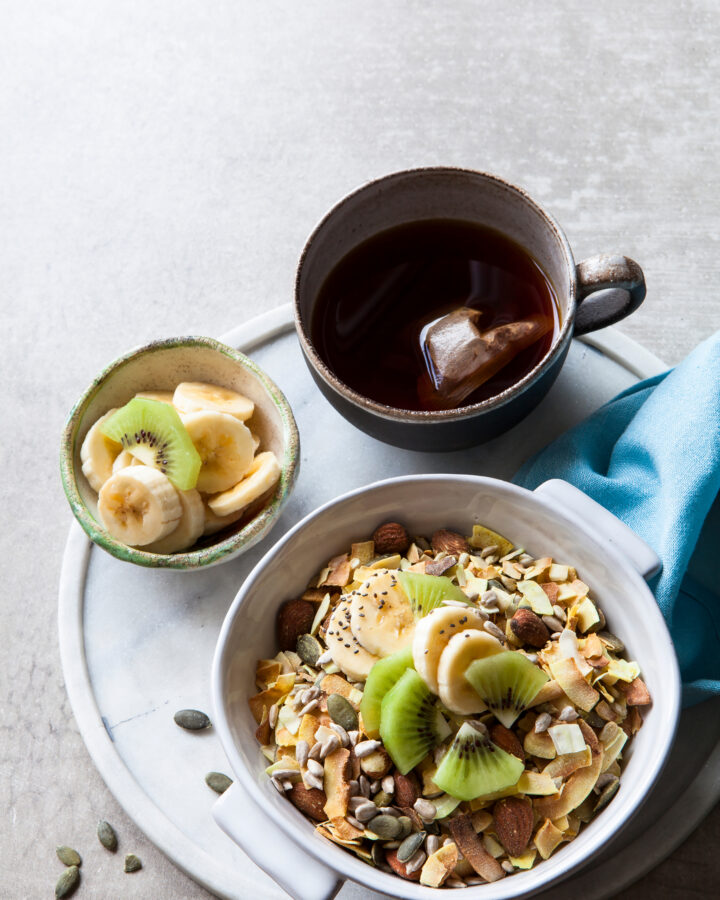
Less than a quarter of people following healthy, plant-rich diets get enough flavanols to reap the [hahrt helth]nounThe overall condition and function of the cardiovascular system, including blood pressure, cholesterol, and arterial health; critical for longevity and disease prevention.Learn More: Heart Health benefits, a new study shows. One targeted dietary addition can help you get there.
You’ve heard it a thousand times: Fruits and vegetables are the foundation of a heart-healthy diet. But a major new analysis of one of the largest nutrition trials ever conducted suggests that when it comes to heart health, hitting the standard five-a-day recommendation may not be enough.
The trial in question is COSMOS, a large randomized controlled study from 2022 that’s become one of the most closely watched pieces of polyphenol research to date. Its focus: flavanols, a specific subclass of plant compounds that includes catechins, epicatechins, and procyanidins, found naturally in tea, cocoa, apples, grapes, berries, and certain legumes.
In the trial, participants who took a cocoa flavanol supplement providing 500 mg per day of flavanols did not see a statistically significant reduction in rates of major cardiovascular events. But they did see something more specific and, for older adults in particular, more striking: reaching that daily dose of flavanols was associated with a 27% lower risk of cardiovascular death among older adults.
Now, a 2026 follow-up study asks a different, more actionable question: can people actually reach that same 500 mg per day flavanol level just by following standard dietary guidelines for fruits and vegetables?
Using biomarker data from COSMOS participants, plus a second large UK cohort as a replication check, the researchers found the answer is no. Even among people who met dietary recommendations and had high overall diet quality, fewer than 25% reached an estimated flavanol intake of 500 mg per day.
If everyone falling short of that goal is missing out on cardiometabolic benefits, that means we’ve got work to do. Here’s how to up your intake strategically for a healthier heart — and why it’s so worth doing.
Flavanols Are Not Flavonols (and the Difference Matters)
Before going further, it’s worth clearing up a common point of confusion. Flavanols and flavonols sound nearly identical, and they’re often used interchangeably online, but they are not the same compound.
Flavonoids are naturally occurring polyphenolic compounds found in fruits, vegetables, tea, cocoa, wine, and other plant foods. They’re associated with antioxidant and [an-tee-in-flam-uh-tawr-ee]adjectiveReducing inflammation, which contributes to better overall health.Learn More: Anti-Inflammatory effects, which protect the heart and prevent DNA damage.
As Jennifer Pallian, RD, explains, flavonols with an “o” are one of the most abundant flavonoid subclasses. Common examples include quercetin, kaempferol, myricetin, and fisetin, which can be found in foods like onions, kale, lettuce, tomatoes, apples, grapes, berries, tea, and red wine.
Flavanols with an “a,” on the other hand, are a separate subclass entirely, and they’re the compounds at the center of the COSMOS findings. According to Pallian, they are found in foods such as tea, cocoa-derived products, apples, pears, berries, grapes, bananas, peaches, and certain legumes. Catechins and epicatechins are some of the best-known examples.
The overlap in food sources between the two categories is part of why they’re so easily confused. But the cardiovascular research specifically implicates flavanols, not flavonols — an important distinction if you’re trying to act on the COSMOS findings.
Why Flavanols Appear to Matter So Much for Your Heart
So what exactly are flavanols doing inside your body that might explain the COSMOS results?
The answer largely comes down to the lining of your blood vessels, called the endothelium, Pallian says: Flavanols have been shown to improve [bluhd floh]nounThe movement of blood through the circulatory system, delivering oxygen and nutrients to organs and tissues to support energy, healing, and overall health.Learn More: Blood Flow by relaxing the smooth muscle walls of blood vessels, and widening the endothelium.
“Flavanols may also improve [nahy-trik ok-sahyd]nounA molecule produced naturally in the body that relaxes blood vessels, improves circulation, and supports heart and brain function.Learn More: Nitric Oxide availability, reduce arterial stiffness, support healthy blood vessel function, and contribute to improvements in blood pressure, cholesterol concentrations, and blood sugar regulation, which are important for heart health,” she tells Super Age.
She points specifically to catechins, one of the major flavanol groups, as having outsized influence on reducing oxidative stress, improving endothelial function, reducing vascular inflammation, improving lipid profiles, and helping to regulate vasoconstriction.
Put simply, flavanols appear to help your blood vessels relax, dilate, and function the way they’re supposed to, which has ripple effects across blood pressure, inflammation, and overall cardiovascular risk.
You Probably Won’t Notice If You’re Falling Short
According to the follow-up study’s biomarker analyses, simply eating more fruits and vegetables won’t likely help you reach the flavanol levels needed to achieve cardiovascular benefits. Reaching 500 mg per day was unlikely when people prioritized fruits and vegetables commonly consumed in the United States, including foods such as bananas, apples, tomatoes, grapes, oranges, and carrots.
Alexander Leritz, RD, CNSC, CDN, a dietitian working with JM Nutrition, says that doesn’t mean flavanol shortfalls show up as a deficiency. “There are no recognized conditions associated with inadequate flavanol intake in the same way that inadequate iron can lead to anemia or lack of Vitamin C leading to scurvy,” he notes.
Flavanols are not classified as an essential nutrient and therefore don’t have an established Dietary Reference Intake, the dietitian adds. But given the research, it’s clear that reaching higher levels is still meaningful to your cardiometabolic health, and that falling short leaves those potential benefits on the table.
Where to Find the Highest-Dose Flavanols
If apples and berries alone won’t get you there, what will?
“To increase flavanol intake, it may be helpful to focus on foods that provide larger amounts per serving,” Pallian advises.
Do the math, and it becomes clear why fruit alone struggles to close the gap. As Pallian explains: a small apple provides about 15 mg of flavanols, while blueberries, raspberries, strawberries, and grapes provide roughly 6 to 10 mg per cup. By contrast, an 8-ounce serving of green tea comes in at approximately 319 mg, and black tea at approximately 277 mg.
If you combine both approaches — drinking tea and eating fresh produce — tea is doing most of the heavy lifting here. A cup of green tea plus an apple would provide roughly 334 mg, which is still close to 200 mg shy of the 500 mg target, while two cups of green tea would exceed the target by over 100 mg. Leritz agrees that it’s the most accessible entry point, noting that one to two cups of black or green tea can contribute a meaningful amount of flavanols without stacking additional calories.
Does This Change the Advice to “Eat More Produce”?
Not exactly. Both experts are clear that this research builds on existing dietary guidance rather than overturning it. And Pallian emphasizes that fruits and vegetables remain important components of any healthy diet.
“These guidelines are still very important because they recommend intakes of foods that provide fiber, vitamins, minerals, and other beneficial plant compounds that keep us healthy,” Leritz says. “A better interpretation would be that the type of fruits and vegetables consumed also matters, not just the total quantity.”
Given that the current dietary guidelines were not designed specifically to ensure adequate intake of flavanols, the goal should be to “build upon the current guidelines by intentionally selecting higher-flavanol foods,” he adds.
Stopping short of a dietary overhaul, Leritz suggests making small, intentional shifts: starting and ending the day with a cup of green tea with an apple or berries as a snack in between. Your meals should also include a variety of other fruits and vegetables throughout the day.
He’s also careful to note that this shouldn’t become a source of dietary stress: “Flavanol intake should not become another anxiety-inducing nutrition metric to hyper fixate on,” he tells Super Age. “For the average person, the practical takeaway is simple: aim to include plenty of fruit and vegetables with the added layer of aiming to include a few flavanol-rich foods where reasonable.”
What About Supplements?
Given that the COSMOS study used a cocoa flavanol supplement to assess the heart health effects, it’s worth asking whether supplementation might be an easier shortcut than relying on tea and food.
Pallian doesn’t think so. Whole foods, she explains, have a major advantage over supplements because outside of providing flavanols, they also provide fiber, micronutrients, and other plant compounds. Like many dietary experts, she recommends a “food-first” approach to flavanol intake, noting that food-derived flavanols provide additional benefits that isolated supplements can’t while adding virtually no risk of toxicity at high doses.
The COSMOS findings, and those of the follow-up study, don’t suggest that flavonoid-rich produce is suddenly less important or that supplements are the answer. What they do suggest is that the conversation around heart-healthy eating may benefit from more specificity.
If your goals include supporting vascular health and reducing cardiovascular risk, flavanols — particularly from tea — appear to deserve a more deliberate spot on your plate, and in your cup, than general “eat the rainbow” advice alone would suggest.
A balanced diet, paired with a few targeted additions, will yield the best results.
Read This Next:
The information provided in this article is for educational and informational purposes only and is not intended as health, medical, or financial advice. Do not use this information to diagnose or treat any health condition. Always consult a qualified healthcare provider regarding any questions you may have about a medical condition or health objectives. Read our disclaimers.
Written By:
