

The Fruits and Vegetables With The Most Pesticides (Here’s What to Do About It)
A 2026 Strategic Guide to Pesticides in Produce
One of the most consistent findings in [lon-jev-i-tee]nounLiving a long life; influenced by genetics, environment, and lifestyle.Learn More research is this: eat more plants. More fiber, more phytonutrients, more produce at every meal. Good advice and we’re not here to complicate it. But a growing body of evidence suggests that how your produce was grown matters alongside how much of it you eat, particularly when it comes to pesticide residues and what they leave behind in your body.
A peer-reviewed study published this fall in the International Journal of Hygiene and Environmental Health makes the connection unusually concrete. Researchers tracked the produce consumption of nearly 1,900 adults and measured their urinary pesticide levels, then cross-referenced those measurements against a pesticide load index built from USDA testing data. People who ate more produce ranked higher on pesticide contamination had measurably higher pesticide biomarkers in their bodies — particularly for organophosphate, pyrethroid, and neonicotinoid insecticides. What you eat shows up in your body. That’s worth knowing.
Pesticides and Your Health: What to Know
A note on the source: this study was conducted by scientists at the Environmental Working Group, the same organization that publishes the annual Dirty Dozen list, the 12 foods with the most pesticide residues. Their findings validate their own consumer guide, which is worth naming. The methodology is peer-reviewed and builds on earlier validated work from Harvard-affiliated researchers, so the science holds, but independent replication would strengthen these findings further.
That said, they are also trying to answer the question: What do higher pesticide biomarkers actually mean for your health? The answer: we don’t know with certainty at dietary exposure levels. Research links organophosphate, pyrethroid, and neonicotinoid insecticides to potential hormonal and thyroid disruption, but the strongest evidence comes from occupational exposure, not your salad. Associations at lower dietary exposure levels exist and are worth taking seriously. Causation? The research isn’t there yet.
Translation: this is absolutely not a reason to eat fewer vegetables. But it’s good information to take to the grocery store with.
Pesticide residues turned up on 96% of “Dirty Dozen” samples, with every item except potatoes averaging four or more different pesticides per individual sample. A total of 203 pesticides were detected across the 12 produce types. That’s not a typo.
Before the list: it helps to know what kinds of pesticides keep appearing, because the same names come up repeatedly:
- Fungicides, chemicals applied to control mold, often post-harvest in storage, are the most commonly detected class across the Dirty Dozen, and several are under scrutiny as potential hormone disruptors:
- Pyrethroids are insecticides linked in some studies to neurological effects.
- Neonicotinoids, once considered a safer alternative to organophosphates, are increasingly associated with nervous system and reproductive concerns in animal studies, and several are banned in the EU.
These are the specific chemicals showing up on your produce, often in combinations that haven’t been studied for cumulative effect.
The 2025 Fruits and Vegetables with the Most Pesticide Exposure
EWG’s analysis drew on USDA Pesticide Data Program testing of more than 53,000 non-organic samples, tested after washing and peeling, the way you’d actually prepare them at home. Here’s what they found:
1. Spinach — the most pesticide-contaminated produce by weight. USDA testing found an average of seven pesticides per sample, with up to 19 on a single sample. Three-quarters of conventional samples contained permethrin, a neurotoxic pyrethroid insecticide banned from food crops in Europe since 2000. Residues of DDT breakdown products, from a pesticide banned in the U.S. in the 1970s, were found on 40% of samples, persisting in soil decades later.
2. Strawberries — nearly 100% of conventional samples had detectable residues, with an average of about eight pesticides per sample. Some 30% had residues of 10 or more pesticides; one sample carried 23. Among the concerning findings: carbendazim, a hormone-disrupting fungicide banned in the EU and classified as a possible carcinogen; and bifenthrin, a pyrethroid the EPA designates a “possible human carcinogen,” found on nearly 30% of samples. (Note: EWG’s strawberry page draws on 2015–2016 USDA data, the most recent available for this crop.)
3. Kale, collard and mustard greens — 100 different pesticides detected across the leafy green category, with an average of more than five per sample and up to 21 on a single sample. Nearly 60% of kale samples contained DCPA (Dacthal), a possible carcinogen banned in the EU since 2009 that the EPA emergency-canceled in the U.S. in 2024 after new data showed it disrupts thyroid hormone development in fetuses. One in four samples also carried bifenthrin or cypermethrin, two pyrethroids linked in epidemiological research to adverse neurodevelopmental outcomes in children.
4. Grapes — consistently high across fungicide and insecticide categories, with both domestic and imported varieties affected. Among the most commonly found: fludioxonil and pyrimethanil, two fungicides that research suggests may disrupt androgen receptors and harm the male reproductive system.
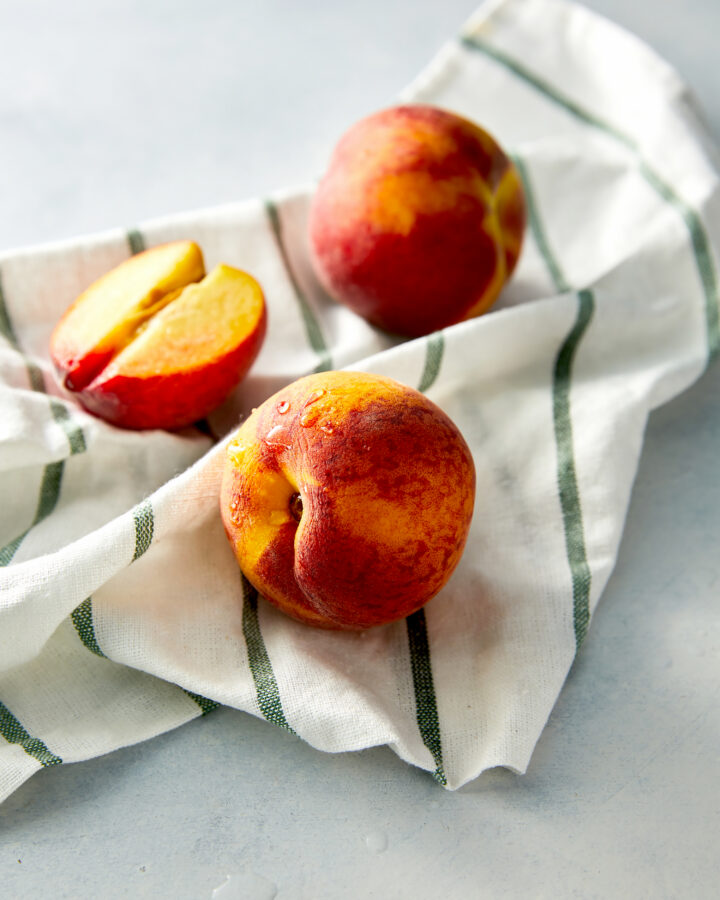
5. Peaches — 99% of conventional samples contaminated. Fifty-nine different pesticides detected overall; over 65% of samples had four or more. The fungicide fludioxonil was found on nearly 90% of samples. Neonicotinoid insecticides, including acetamiprid and imidacloprid, were also detected (imidacloprid is banned in the EU due to harm to pollinators and emerging evidence of effects on human health).
6. Cherries — the one Dirty Dozen item where no single sample exceeded 50 different pesticides, but overall contamination remains consistently high, dominated by fungicides applied during storage.
7. Nectarines — similar contamination profile to peaches, with fungicides and neonicotinoids the dominant classes. The thin skin offers little barrier.
8. Pears — one of the more alarming trend lines on the list: 61% of recent samples had five or more pesticides, compared to just 3% in 2010. The average amount of pesticide residue on pears doubled between 2010 and 2022. The fungicides pyrimethanil and fludioxonil dominate; carbendazim, a fungicide toxic to the male reproductive system and a possible carcinogen, was found on about one in three samples. Diphenylamine, banned in Europe over concerns it may form cancer-causing nitrosamines, appeared on more than one in 10.
9. Apples — 97% of samples had at least one pesticide residue; 90% had two or more. Diphenylamine, a post-harvest chemical the EU banned in 2012 over concerns it may form cancer-causing nitrosamines, was found on 60% of samples. The fungicides pyrimethanil and fludioxonil were found on 66% and 48% of samples respectively, and acetamiprid, a neonicotinoid, appeared on 36%. The EU has moved to reduce the safe exposure level for acetamiprid due to concerns about effects on the developing nervous system.
10. Blackberries — new to the list after first-time USDA testing in 2023. Pesticides detected on 93% of samples, with 48 different pesticides found across all conventional samples and up to 14 on a single one. The most common was cypermethrin, a pyrethroid classified by the EPA as a possible human carcinogen, found on just over half of all samples. Malathion and acetamiprid, an organophosphate and a neonicotinoid respectively, were also detected.
11. Blueberries — pesticides found on 90% of samples, up from 81% in 2014, with up to 17 different residues on a single sample. The most concerning findings are phosmet and malathion — organophosphate insecticides toxic to the nervous system, both banned in the EU, with phosmet showing up at levels of concern for infants and children in the EPA’s own risk assessments. Neonicotinoids acetamiprid and imidacloprid are also present, both at higher rates than in 2014.
12. Potatoes — rejoined the list primarily due to chlorpropham, a sprouting inhibitor applied post-harvest, found on 90% of samples at an average concentration nearly twice the level used in the EPA’s own most recent risk assessment. The EU banned chlorpropham in 2019 after regulators found that children eating treated potatoes may be exposed above safe levels. Potatoes averaged two pesticides per sample, lower than other Dirty Dozen items, but the chlorpropham concentration and prevalence tell the more important story here.
Two items ranked just outside the official dozen but topped the list on toxicity of detected pesticides: bell and hot peppers and green beans. For green beans specifically: acephate, an organophosphate whose registration for use on green beans was canceled by the EPA in 2011, still appeared on roughly 8% of samples in 2021–2022 testing, in some cases at concentrations 500 times above the EPA’s own allowable limit. If either is a daily staple, treat them like they made the list.
And the Clean Fifteen (Buy Conventional)
Nearly 60% of samples from these 15 produce types had no detectable pesticide residues at all. This is where you save your budget:
- pineapple
- sweet corn
- avocados
- papaya
- onions
- frozen sweet peas
- asparagus
- cabbage
- watermelon
- cauliflower
- bananas
- mangoes
- carrots
- mushrooms
- kiwi.
Eat them freely, buy them conventionally, spend your organic dollars elsewhere.
Five Strategic Swaps
You don’t need to overhaul your entire grocery routine. The research points to something simpler: identify the high-residue produce you eat most frequently and prioritize organic there first. A few things that actually move the needle:
Audit your top five. Which items from the Dirty Dozen do you eat most? Daily spinach smoothies or strawberries several times a week are the first swaps worth making. Occasional cherries in July? Lower priority. Frequency is the variable that matters most here.
Use the skin rule as a rough guide. Thin-skinned produce, berries, grapes, peaches, apples, absorbs and retains more residue than produce with a rind or skin you peel before eating. It’s not a coincidence that avocados, pineapple, onions, and bananas are reliably among the cleanest options.
Wash everything under running water. A 2022 peer-reviewed study in Foods found that washing leafy vegetables under running water reduced pesticide residues by an average of 77%, the single most effective common household method, outperforming detergent washes. A Connecticut Agricultural Experiment Station study confirmed that commercial produce washes perform no better than plain tap water. Save the $8. The mechanical action of water is what does the work. One honest caveat: systemic pesticides, those absorbed into the plant rather than sitting on the surface, can’t be washed off. Which is one reason organic matters most for the highest-residue items.
Try baking soda for apples. A University of Massachusetts study published in the Journal of Agricultural and Food Chemistry found that a dilute baking soda solution (about 1 teaspoon per 2 cups of water), outperformed both plain water and bleach solution at removing surface pesticide residues from apples. It requires a 12–15 minute soak to be effective, and can’t touch residues that have penetrated beneath the skin. But if apples are a daily habit and organic isn’t always accessible, it’s a useful tool.
Frozen organic counts. Frozen organic strawberries, blueberries, and spinach are widely available, nutritionally comparable to fresh, and considerably cheaper than their fresh organic counterparts. EWG specifically flags frozen as a smart budget alternative. It’s not a compromise, it’s just a different aisle.
The goal here isn’t anxiety about every bite of a peach. It’s the thing we come back to constantly at Super Age: small, strategic choices made consistently over time are what actually move the needle on how you feel and how long you feel that way. Knowing which dozen items to prioritize for organic, and which 15 you can skip, is exactly that kind of low-effort, high-return shift.
Read This Next
The information provided in this article is for educational and informational purposes only and is not intended as health, medical, or financial advice. Do not use this information to diagnose or treat any health condition. Always consult a qualified healthcare provider regarding any questions you may have about a medical condition or health objectives. Read our disclaimers.
Written By:
