

How to Build Strength and Power, And Keep It
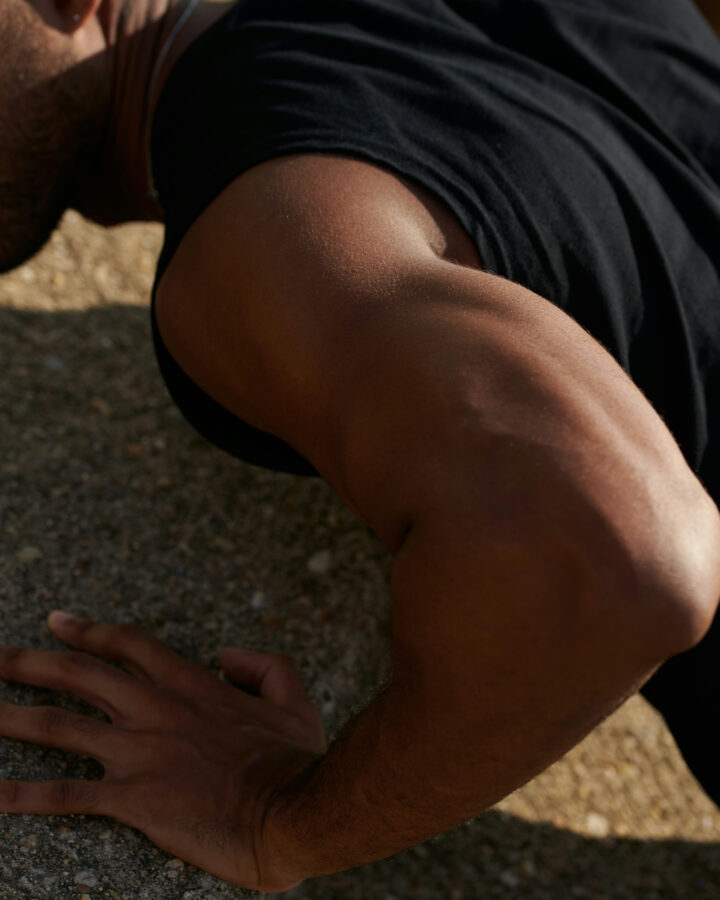
Balance, strength, joint stability, recovery. Here what you need to know.
Maintaining fitness takes work. “Muscle is a luxury tissue. Your body has to do a lot to keep it. It’s the last to build and the first to go,” says Michelle MacDonald, a SuperAge advisor and creator of The Fitness Model Blueprint.
Strength and resistance training become even more important as we age to protect and build muscle. This is especially true for women post-menopause. Both men and women should focus on [pruh-gres-iv oh-ver-lohd]nounGradually increasing workout intensity to build strength and endurance.Learn More: Progressive Overload, as well as some power work, and lighter loads moved quickly, to counter age-related declines. By adapting and prioritizing our routines, we can set ourselves up for fitness success today and for years to come. Here’s how to do it.
1) Protect Joints and Tissues
Joints, muscle, and bones work together to stabilize the body, and allow it to make dynamic motions. But the structures that help joints function, i.e. the cartilage, ligaments, tendons, and tiny deep muscles that surround the joints, change over time. Cartilage thins, reducing the joint’s ability to withstand and distribute compressive load; the composition and level of synovial fluid lubricating joints changes; and ligaments and tendons lose elasticity. These factors make joints less stable and more prone to wear-and-tear over time.
“We don’t appreciate how aligned our joints are supposed to be. Certainly there’s the configuration of the bones with one another that makes those joints work. But it’s the active control of muscles around the joint that helps to keep our joints healthy,” says Liz Joy, MD, FACSM, former president of the American Council on Sports Medicine.
We should also consider our ligaments and tendons. Declining collagen levels and the formation of protein cross-links makes cartilage stiffer, increasing the risk of fatigue failure during movement. As we age, we lose proteoglycans, large water-binding molecules in cartilage that lock in moisture. “There’s a natural dehydration and it’s accelerated in the mid-forties, in your mid-sixties, and in your eighties. So, we want to be respectful of that,” says MacDonald.
Here are some ways to protect your joints and tissues:
- Eat an [an-tee-in-flam-uh-tawr-ee]adjectiveReducing inflammation, which contributes to better overall health.Learn More: Anti-Inflammatory diet. Focus on whole foods, including fruits and vegetables, whole grains, and healthy fats rich in omega-3s, and avoid ultra-processed foods. The impact of these dietary shifts can’t be overstated, according to Dr. Joy.
[in-fluh-mey-shuhn]nounYour body’s response to an illness, injury or something that doesn’t belong in your body (like germs or toxic chemicals).Learn More: Inflammation is considered both a cause and consequence of osteoarthritis. When the body detects injury, it triggers the release of enzymes that further damage cartilage, which leads to more damage and more inflammation.
Meanwhile, eating a diet high in sugar and processed food can also contribute to collagen loss, which makes tissues more stiff and less functional.
Eating a balanced Mediterranean diet is a sound way to ensure you’re getting the biggest nutritional bang to support [lon-jev-i-tee]nounLiving a long life; influenced by genetics, environment, and lifestyle.Learn More: Longevity.
- Stay hydrated. “You can’t afford to be dehydrated. When you’re younger, you could be dehydrated and get away with it. Not now,” says MacDonald.
As we age, we experience declines in both the regulation of fluid intake and thirst, meaning we may not be able to gauge what we need from body signals. The National Academies’ guidance for how much water to drink per day includes 104 ounces (~13 cups) of fluid per day for men, and for women, 72 ounces, (~9 cups).
- Keep moving. Movement keeps synovial fluid circulating, lubricating and nourishing joints and their surrounding cartilage. “Motion is lotion for the joints, and for tendons and ligaments,” says Joy. And exercise, particularly low-impact activities, may help strengthen cartilage and slow degeneration.
- Warm up and cool down. Even 5 minutes of dynamic warm-up will help prepare muscles for activity, reducing resistance and increasing flexibility and range of motion. “And as you’re warming up, you’re doing it very mindfully and feeling like, Does anything feel off today that might snap?’” adds MacDonald. It’s equally important to spend 5 more minutes at the end of your workout to stretch and use a foam roller, she tells us.
- Strengthen your core and pelvic floor. Your core, including the pelvic floor and abdominal muscles, play a huge role in locomotion and stabilizing your body, which helps with joint alignment, says Joy.
- Break up sitting time. Constant sitting, like spending hours in front of a computer, can overload the joints in your back. ”Those little stabilizing joints are not meant to carry a huge load. When they have to start carrying [one], that’s when they start to develop arthritis,” Joy adds.
- Consider new parts. If joint pain has reached the point where it keeps you from the activities you love, you might consider a replacement. “The technology with joint replacement has advanced significantly,” states Joy. “I’m definitely pro-joint replacement if it allows you to be active.”
2) Master Your Mechanics
All of us have some habits of activity, or facts of physiology, that, over time, can lead to asymmetries and affect movement patterns that cause problems. Leg-length discrepancy is a common one, says MacDonald. Poor posture is another.
These may not affect you when you’re younger. But over time and as our bodies compensate and other asymmetries form, it can make you vulnerable to injury. For example, a collapsed foot arch will eventually affect your knees, hips, and low back, MacDonald says. Her advice? Get a body mechanics review
- What’s a body mechanics review: A quick movement screen or gait/posture check can reveal asymmetries.
- How do you do that? You can have this done by a trainer at a gym or a physical therapist.
“Check yourself before you wreck yourself,” she cautions. “Check your leg length. Look at your pelvis. Look at your foot pressure.” Getting a clear view of how your body is moving — and how to correct imbalances — will help you keep moving, she says.
Dr. Joy agrees. “It’s a little humbling for an active person to go and have that first assessment done [and to] see all the deficiencies and asymmetries,” but it is worth it, she confirms.
3) Go Back to Basics
Staying safe in any activity means knowing how to use your body correctly to perform well. But when you ran your first 10K, did you have a coach? What about when you started cycling? Did a certified trainer teach you to deadlift safely, or did you pick it up on your own or in a rapid-fire Orange Theory class?
For fitness enthusiasts, not knowing the basics can come back to haunt us later on.
MacDonald points out that it’s “rare” that she sees everyday exercisers using their bodies properly in their chosen activity. She describes women running with their knees “knocking” inward or not engaging their quads and buttocks. “And then they go and do a marathon like that. Of course, [they’re going to have] ankle, knee and hip problems.”
The same goes for weight lifting, especially among women. “Women are often not taught how to lift correctly,” says Jen Wagner, MD, a SuperAge advisor and Chief Wellness Officer of Canyon Ranch.
Seek out professional training in your given activity — get a gait analysis, relearn safe lifting after 50 — even if it means taking some time off to [re]master the basics.
4) Include Balance, Proprioception & moh-bil-i-tee]nounThe ability to move freely and easily through a full range of motion.Learn More: Mobility Exercises
As we get older, balance and flexibility are no longer nice-to-haves, they’re essential. Subtle declines in vision, inner-ear function, and proprioception all add up to greater risk of instability and falling.
“You’ve been wearing shoes your entire life. Unless you’ve been training those stabilizing muscles, if you don’t work on balance, it’s easier to lose your balance,” MacDonald points out.
The good news: Training these systems works.
Practices like tai chi and yoga have been shown to improve balance and coordination while also calming the nervous system. Even five minutes a day of single-leg balance or walking barefoot on varied surfaces, can help wake up those muscles.
Flexibility also shifts in meaning as we age. It’s not about touching your toes, it’s about mobility: keeping hips, knees, and shoulders moving through their full range of motion. “Joint mobility is really important in terms of allowing us to safely engage in activities,” declares Dr. Joy.
For this, she strongly recommends yoga. “It’s great for joint mobility, it’s great for joint stability, and there’s this meditative component to it that allows us to destress and be mindful and in the moment. All of us could use a little of that.”
5) Listen, Adapt, Recover
One of the biggest shifts in midlife fitness isn’t physical, it’s mental. The mindset that drove performance in your 20s, 30s, or even your 40s (“push harder, power through”) can backfire later. “Don’t ruin your body because of ego,” cautions MacDonald.
Listening to your body is a powerful tool for longevity. That may mean swapping a 6 a.m. workout for an evening session that better fits your energy, or trading a long run or an intense pickleball session for a yoga class — or a day off.
Jen Wagner suggests regular self-check-ins, whether that’s with wearable tech or a simple journal. “[It’s about] Where am I now, what’s working, and what’s not?” she states.
Likewise if we don’t give ourselves enough time to recover, we can cause self-harm: In addition to muscle strain, under-recovery and overtraining can drive hormonal and inflammatory changes that raise injury risk. A mindset shift can keep you safe and active for the long game.
“[We need] to embrace the mindset of ‘As my body and physiology are changing, I’m gonna need to change the way I do things. And I need to be OK with that,’” Wagner concludes.
Focus on What Matters
Aging doesn’t mean focusing less on fitness — on the contrary. Staying active is essential for physical, mental, and emotional health for life.
We just may need to adjust our focus.
Body weight is a good example. For [helth-span]nounThe number of years you live in good health, free from chronic illness or disability.Learn More: Healthspan, muscle beats skinny. Low body weight is a fracture risk factor. It also can indicate insufficient calorie intake and the risk of nutritional deficiencies we can’t afford as we get older.
Also important: Mixing up your activities to ensure you challenge and train your body in different ways. “You don’t ever want to be a one-trick pony,” says Dr. Joy. “Physical activity should be like your investment portfolio: It ought to be diverse. That’s what really supports healthy aging.”
And perhaps most important, know when to pull back. Pain or a new “niggle,” as Michelle MacDonald puts it, is information. This may be a signal that it’s time to shift to a different modality, shorten the session, or rest.
Sometimes it means considering new tools, like joint replacement, that allow you to stay active.
The takeaway: Staying fit with age isn’t about doing more or even about doing less. It’s about doing what matters most now, so you can remain active for the long haul.
Read This Next
The information provided in this article is for educational and informational purposes only and is not intended as health, medical, or financial advice. Do not use this information to diagnose or treat any health condition. Always consult a qualified healthcare provider regarding any questions you may have about a medical condition or health objectives. Read our disclaimers.
Written By:
