

6 Ways to Strengthen Your Feet and Ankles
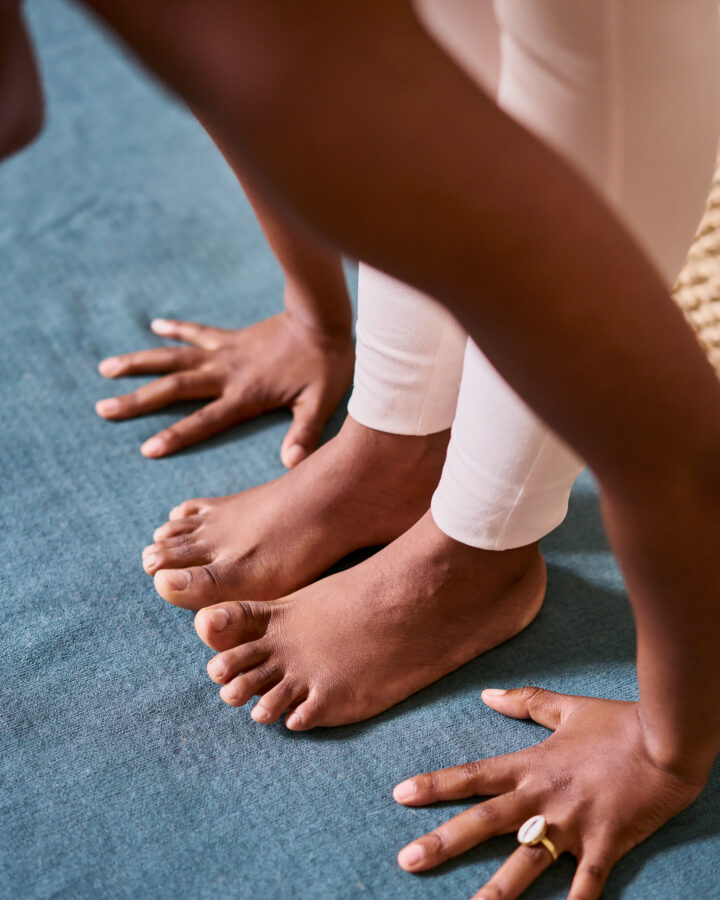
When your body’s weak close to the ground, you’re more likely to fall — and less likely to be active and agile.
You’ve probably heard that [grip strength]nounA key marker of strength and predictor of longevity.Learn More: Grip Strength is a key biomarker for living a long, healthy life. Maybe you’ve even started timing yourself hanging from a bar to build up this proxy for all-body strength. But there’s another grip strength that might be just as important for staying active, upright, agile, and pain-free for the long haul: The grip of your toes.
“It’s one of their key functions,” says John Osborne, PhD, a sports podiatrist and researcher at Monash University in Melbourne, Australia. When your toes can’t perform that key function, he says, you’re more likely to fall when you find yourself tipped forward. “You may give way because your toes can’t grip to hold you there,” he explains.
In fact, if even just a portion of your feet are weak, this can lead to balance problems: one study from 2009 that followed 312 older people for a year found that people who had weak big toes were more likely to fall than those who didn’t.
For [helth-span]nounThe number of years you live in good health, free from chronic illness or disability.Learn More: Healthspan and function, falls can be life-altering or even life-threatening: When older people fall and break their hips, there’s a 50 percent chance they’ll die in the five years after their spill. For those who don’t break their hips, falls significantly impair “activities of daily living,” the scientific term for “living a regular, independent life.”
Even if you’re not worried about falling because you’re a younger [lon-jev-i-tee]nounLiving a long life; influenced by genetics, environment, and lifestyle.Learn More: Longevity-seeker, declining foot and ankle moh-bil-i-tee]nounThe ability to move freely and easily through a full range of motion.Learn More: Mobility can result in reduced activity, pain, and function, says Mike Stella, a physical therapist and founder of The Movement Underground.
“We leave those things underloaded for long periods of time, and that’s the worst thing you can do to that kind of connective tissue,” he says. “Unless you’re robustly healthy and staying on top of that, you’re going to have some degradation, and people end up with some painful chronic conditions.”
Don’t sign up for that toe yoga class just yet, though. Stella and Osborne are here to help explain how our feet and ankles have gotten into this unstable situation, and offer six simple ways to strengthen and stabilize from the ground up.
The Pair of Problems Your Feet Are Facing
Your feet and ankles are basically out of shape, Stella says, and our world is designed to keep them weak.
“We’re an organism that was built for an outdoor environment, but now we’re walking purely on concrete and hard, padded surfaces. It’s basically the same story as de-conditioning anywhere else in the body,” he says. Instead of challenging the muscles and tendons, which would keep them strong, “the modern approach to foot health is to put it in a straitjacket and lock it in a padded room — this big, bulky padded stability shoe.”
Many of our shoes are also built with narrow toe boxes, squishing our toes into an environment where they can’t create a wide, stable base of support. Over time, this can change the shape of our feet, moving the big toe inward and causing bunions, which decrease balance and increase fall risk.
That pairing — modern footwear and a lack of natural walking conditions — have created a cycle that’s hard to break. Cushioned, structured shoes mean feet and ankles rarely get the uneven-surface training they need to stay strong, and weak ankles are unstable ankles. Take those funky feet out in the uneven world, and Osborne says they become vulnerable to ligament injuries that, when repeated, lead to chronic instability.
Each small injury also chips away at confidence, making you less likely to challenge your feet and ankles — which makes them weaker still. “You have less trust in your ankle and thereby as a result, you’re less active and less strong,” Osborne says. “And if you’re less active and less exposed to these sorts of challenges, then you’re going to be less durable or resilient as you age.”
Even worse, Osborne says, is that many of the remedies people try to strengthen their feet don’t provide enough stimulus to truly strengthen them. When he reviewed 87 studies on exercises for feet and ankles in a 2025 research review, Osborne found that programs were often laden with difficult-to-understand exercises that didn’t provide enough load to strengthen the muscles.
These exercises, he says, were often providing less muscular stimulus than people would get just from walking around in their bare feet. No wonder, then, that another research review found little correlation between ankle and feet-strengthening exercises and reduced fall risk or fall incidence.
6 Ways to Strengthen Your Feet and Ankles
The key, Osborne and Stella say, is to challenge your feet and ankles more, and to do so the same way you would any other muscle: With load that increases over time.
“The devil is in the dose,” Stella says. When people start to get interested in pickleball, for instance, they often overwork their feet and ankles by diving headfirst into dinking. “Put a timeframe on it. Go play for an hour. Don’t go out there and spend six hours on the first day because you feel good and you’re having fun, and the next day you wake up and feel like you got hit by a truck. You just did too much.”
Here are six strategies the experts suggest for a stronger stance.
1. Walk (or work out) in your bare feet.
The cushioning of our shoes prevents our feet from being challenged. So sometimes, Stella says, it’s important to take them off! You can do this while walking around the house or yard, or while you perform lower-body workouts on leg day.
“Don’t always go to the gym and do your sled pushes in your met-con sneakers,” he advises. “Sometimes, do those sled pushes barefoot on the turf so you can feel the ground.”
Remember the dose, though, Stella says: Walk without shoes for 15-30 minutes to an hour to see how it feels, or do part of your workout shoeless. See how you feel the next day. If you’re sore, dial it back. If you’re still feeling good, do a little more the next time.
2. Try shoes with a wider toe box, less padding, and textured insoles.
Finding shoes with a wider toe-box — “feet-shaped shoes,” as Stella calls them — can give your toes the area to spread out, create a wider base of support, and prevent your toes cramping together in the long-term. And getting some shoes with less padding can challenge your feet more.
But just as with going barefoot, the dose matters, he says. Don’t fully replace high-stack Hokas with barefoot-style shoes overnight. Ease into them. And know there are situations where you might want more foam: If you’ve got joint issues and will be doing sports with lots of impact, more padding can help.
Another unexpected thing that can help is textured insoles. These increase the amount of nerves in your feet that fire, and in some studies, have helped people with diabetic neuropathy have better balance.
3. Lean forward.
When you lean forward, as you do when you’re running, there’s more stress put on the foot, Osborne says. And it can also add resistance to exercises that help strengthen the feet and ankles: In a study he conducted with colleagues, leaning forward during exercises that stressed the foot increased the amount the toes need to grip the floor by more than 20 percent.
He suggests trying this as a standalone exercise to start: Stand barefoot in front of a wall where you can catch yourself, and lean forward while keeping your heels on the ground. You’ll feel (and see) your toes gripping the floor. And if you fall forward, the wall’s there for you to reach out and grab.
You can also do this during other exercises, he says. Leaning forward during foot and ankle exercises like heel raises (see below) makes them work the toe grip harder, and adding it to moves like a bicep curl challenges your foot strength while you build bulkier biceps.
4. Jump rope before your workouts.
If you want to be able to run, cut, and jump, Stella says, then you need to run, cut, and jump. But if you’ve lost those skills once essential to childhood play, you can start to introduce them back into your exercise routine using one simple tool: a jump rope.
“Now you’re introducing a ballistic load at a very low level at a very small dose,” he says. “Do that repeatedly over months, and you’re going to build up some tolerance to it.”
Start small, though: Jump for just a few minutes total to start, taking breaks as needed.
5. Do one- and two-legged heel raises.
In Osborne’s study on the foot muscle-activating powers of 16 different exercises, simple heel raises scored among the highest of any move — and they’re simpler to understand and execute than some fancier moves.
“You could do it while you’re standing on the sidewalk waiting for the lights to turn, for example, and you don’t look too crazy,” he says.
Go from a flat foot, or a deficit, if you’re on the end of a curb, and press your toes down to raise your heels as high as you can. To increase the load, try doing heel raises on just one leg (with something to grab for balance), hold weights or wear a backpack.
Do some each day, increasing the load and repetitions over time.
6. Do these two toe-flexing exercises.
You might have seen people spreading their toes out to the sides to try to strengthen their feet. But in Osborne’s study analyzing different exercises, that move actually produced little torque on the muscles. These other two, simple moves did, though.
Move 1 — Hallux flexion: Your hallux is your big toe. With your foot flat on the ground, press your big toe downward and lift your other four toes up off the ground. Flex the big toe down into the ground as hard as you can for three seconds. Start with three reps of three seconds each on each side.
Move 2 — Lesser digit flexion: This is basically the opposite move. With your foot flat on the ground, lift your big toe off the ground and press your other four toes down. Flex the four smaller toes into the ground as hard as you can for three seconds. Start with three reps on each side.
When these get too easy, try leaning forward slightly to increase the load.
Read This Next:
The information provided in this article is for educational and informational purposes only and is not intended as health, medical, or financial advice. Do not use this information to diagnose or treat any health condition. Always consult a qualified healthcare provider regarding any questions you may have about a medical condition or health objectives. Read our disclaimers.
Written By:
