

Trail Running for Longevity: Build VO2 Max, Balance, and Strength
Dimitrije Tanaskovic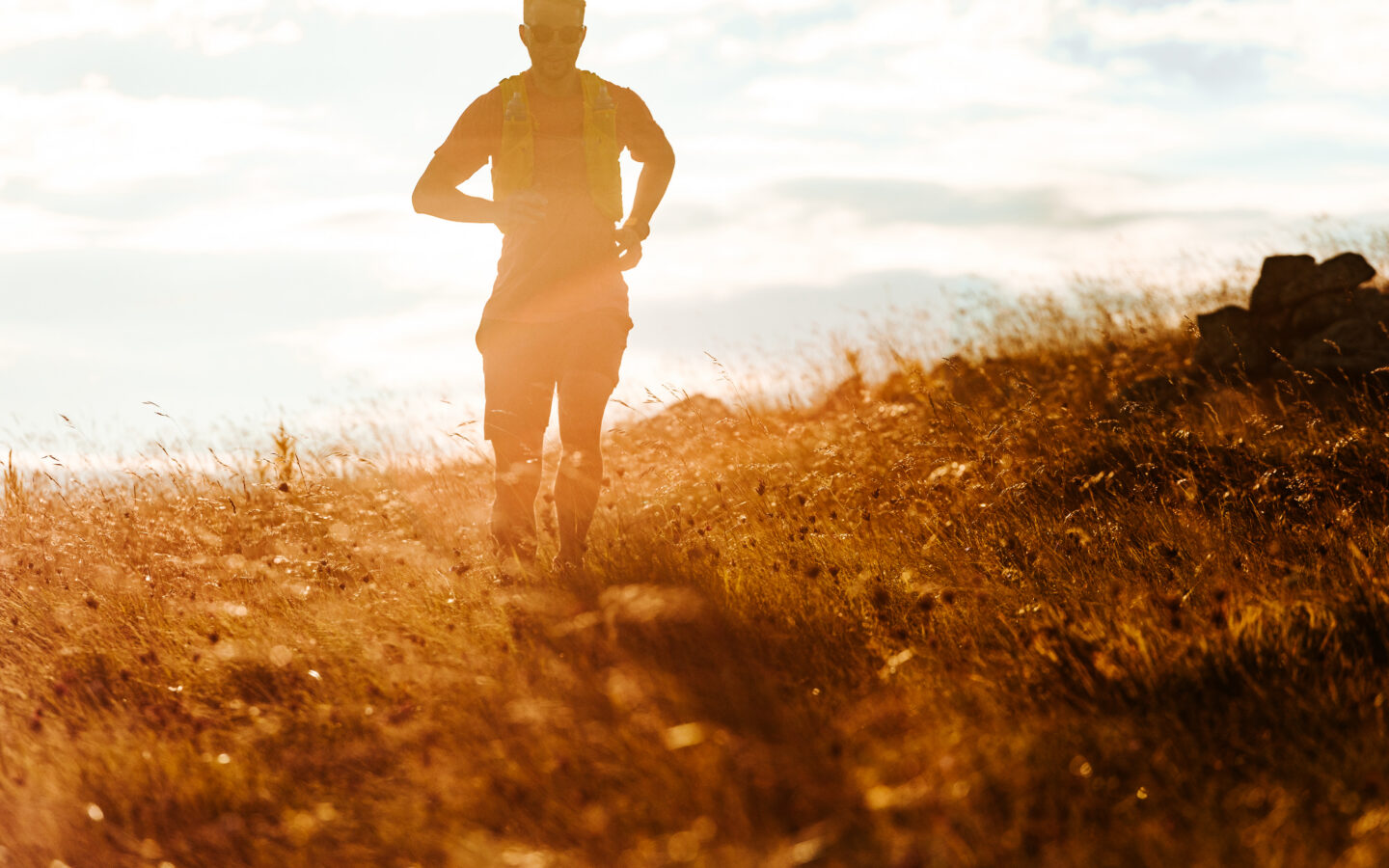
An Olympic ski racer and a Canyon Ranch M.D. share 7 tips to take your cardio from the gym to the trail.
Now that the winter thaw is finally in sight, you might be daydreaming of lacing up your shoes and soaking up the sun and springtime scents on a morning or happy hour jog. But instead of logging your cardio on a treadmill or on pavement, give your Zone 1, Zone 2, or [vee-oh-too maks]nounA measurement of how much oxygen your body can use during exercise.Learn More Training a little more outdoor appeal by trading the gym for the trail.
The Benefits of Trail Running
You’ll not only soak up more scenery, but reap bonus [lon-jev-i-tee]nounLiving a long life; influenced by genetics, environment, and lifestyle.Learn More benefits, too:
- Improved balance: If you want to be upright, it helps to stay upright. People with better balance are less likely to fall, making them less likely to break bones and sit (and calcify) on the sidelines after a fall. And trail running helps. In one very small (but interesting) study of novice runners, 10 ran on trails for 8 weeks, while the other 10 ran on the road. At the end of the two-month trial, the trail runners had improved their balance more than twice as much as the road runners in a metric called the “BESS test.”
- Bigger bumps in VO2 Max: Your VO2 Max is a measure of how much oxygen you can utilize during exercise. More important, it’s one of the strongest predictors of healthy lifespan. In the same small study of trail runners vs. road runners, both groups boosted their VO2 Max over 8 weeks of running. But the trail novices increased their VO2 Max levels over 70 percent more than the road group.
- The same strength and fitness benefit, in less time: In another small study, scientists compared elite road and trail runners in treadmill tests. The trail runners were more powerful, and just as efficient at running on hills as the road crew. (The road runners were more efficient on flat ground) Both groups had similar leg strength. But here’s the shocking part: To build that strength, the road runners had spent 81 percent more time training than the trail runners.
- Increased benefits for mood: You probably don’t need to be told that running on a treadmill isn’t fun, but multiple studies have shown that outdoor exercise creates significantly more “positive affect” than exercising indoors. In one review of multiple studies, scientists found that “compared with exercising indoors, exercising in natural environments was associated with greater feelings of revitalization and positive engagement; decreases in tension, confusion, anger, and depression; and increased energy.”
The Experts’ Take Trail Running
“It’s about just being outside and pushing your limits,” says former World Cup and Olympic ski racer, Doug Lewis about trail running.
“My back and knees survived World Cup ski racing for eight years, but they could not survive road running [after retirement],” adds Lewis, who now runs sports camps for young athletes with his company, ELITEAM. Trail running, “got me off the pavement, off the pounding, and into the woods and trails.”
While it started as a physical benefit, Lewis stuck with the trails for the mental benefit and challenge: Trail running gave him peace in nature, and a place to push himself to his limits.
Suffering isn’t essential, though. If you’re just looking to stay fit, though, the transition from tarmac to trail can also just be more fun, says Jennifer Wagner, M.D., chief health and performance officer at Canyon Ranch.
“If you’re new to running, or if running is ‘boring,’ trail running can be really exciting,” she says.
How To Trail Run for Longevity
Follow these 7 tips from Wagner and Lewis to put more spring in your springtime trail steps: You’ll adopt the right mindset, start with the right trails, and protect yourself from injury.
1: Warm Up (and Strengthen) Your Ankles and Feet
No two steps are alike on a trail run: One stride might end with half of your foot on a flat rock, while the next lands on angled, loose dirt. Your feet will land in thousands of different positions over the course of a few miles … unlike on the road, where every landing is about the same.
That variety of terrain, Wagner says, helps build agility, strength, and body awareness. But it also means that you’re more likely to land in an unfamiliar position and roll an ankle. Strengthening your ankles off the trail, and warming them up before heading out on the trail, are key to staying upright on the varied terrain.
How to Strengthen Your Ankles and Feet: Neither strengthening nor warming up your ankles needs to be complicated, though.
- Before your run, do some ankle circles, rock your body back and forth and side to side to push your ankles through a full range of motion, and do some short hops or skips, says Wagner.
- Stand on one foot while brushing your teeth, says Wagner, to strengthen your feet and ankles.
- Grab a resistance band: Sitting with one foot in front of you, loop the band around the ball of your foot, then hold the band with your hands to provide resistance as you move your ankle in circles, around, and at angles to get stronger in a range of positions. Do this for a few minutes each day, either before or after a workout, or sitting in front of the TV.
2: Ignore Your Watch
“Everyone should smile when they hear this: On trails, you can go slower,” Lewis says. The variety of terrain and the constant uphills and downhills demands it: You’ll need to pay more attention so you don’t fall, and the less grippy surfaces can mean you’re not getting as much momentum with each stride as you would on the road.
“It’s going to be a very different experience than going out and saying, ‘I’m going to run a 7:50 mile for four miles,’” Wagner says. Differences in terrain between different trails means that your pace won’t be the same from trail to trail … so you can’t count on hitting certain times.
Those differences can also mean that your pace will be different from mile to mile, she says:You might be used to running every mile in 9 minutes. But on the trail, your first mile might be 9, followed by a more uphill 12, then a slightly down-sloping 8-minute jaunt.
Lewis’s suggestion: Leave your watch at home, or at least try to ignore it. Focus on the run itself, he says, and you’ll reap not only physiological advantages for your joints, but psychological advantages from being in nature and focused on your task. That is what made the former ski racer become an avowed trail runner.
“You’re going to fall in love with that—the culture, the feeling, being outside, the less focus on times and minutes per mile. That’s all gone,” Lewis emphasizes.
3: Start on Simple Trails
Your first trail runs shouldn’t be on winding, single-track trails on a knife’s edge with steep uphills and downhills, Lewis cautions.
“Look for dirt roads, stone paths, dirt paths that you can do without a lot of [vertical change] … find that trail that works for your lunch hour or your afternoon whatever,” he says. Running on these types of surfaces, without the initial challenge of grueling climbs and steep descents, can help you get used to the bit of slip you can experience on trails. Over time, he adds, you can build up to those more challenging trails if you’re inclined to incline.
Tip 4: It’s OK to Walk Up Hills
In addition to a variety of mile times, Wagner tells us, you’ll also have a greater variety of running speeds on a trail run than you would on road: There will be times you’re picking your way down a hill, using all fours to get up a short, steep section, and bits where you’re flying faster than you would on a street.
One of the speeds to anticipate: Walking. If you’re a high achiever, this can be tough to get used to, she says, but it’s an important strategy: Even high-level trail ultramarathoners power walk up steeper hills. It’s often more efficient (and faster!) than running.
5: To Go Downhill, Focus On Your Feet
Lewis says that keeping his attention on his toes is the key to avoiding injury on the trail—a focus on the feet is the difference between an injury-free run, and one that ends in a twisted ankle.
This is especially true on downhills. While road runners can turn their minds off as they clomp down a slope, trail descents are trickier. Keeping your mind (and your eye) on your feet can reduce the risk of eating dirt, Wagner mentions, as can dialing back the downhill speed until you’ve practiced some trails with steep drops.
To improve your downhill trail pace, she says, try strapping on a weighted vest and walking some trails with more downhill: The added momentum of the vest can help you engage more stabilizing muscles, so you’ll be more stable when you go faster sans vest.
6: Get Shoes With Grip, and Other Key Features
Naturally, trail shoes have a little more grip than road running shoes. But there are other features that can make you feel more stable on the trail, Wagner points out:
- Wider toe box: This can make you feel like you’ve got a wider base to land on, creating more stability on uneven terrain.
- A little more length: “As you descend, your foot tends to slide forward a little bit more than on the road,” Wagner says. Space in front of your toes can save your toenails.
Other features, though, are more subjective: Some trail runners like lower-profile shoes so they’re closer to the ground. Some feel stable in thicker soles with more drop from heel to toe.
Wagner’s advice: Go to a running store. Ask them to fit you for a trail shoe, and to walk you through why certain clients like certain trail shoes over others. Fit those recommendations to what works best for your style and comfort.
7: If You Race, Dial Back the Distance from Your “Normal“
Lots of trail runners get entranced by the sport’s most epic races, like the 100-mile Western States or the Leadville Trail 100, a notorious Colorado 100-miler known as the “Race Across the Sky.”
“It drives me crazy when people go from a [road] marathon to a 100-miler,” Lewis exclaims. “They’re setting themselves up to fail.”
These 100-mile races aren’t just longer, but often feature more varied and extreme terrain. Lewis, who has completed eight 100-milers, actually suggests running a shorter trail race than you’re used to on the road: If you’re used to running marathons, do a 10K or half-marathon on the trail to start. If you’re a half marathoner, go for a 5K. Get used to the unique rigors of these kinds of races, Lewis says, and then build up to the longer trail distances you’re dreaming of.
Read This Next
The information provided in this article is for educational and informational purposes only and is not intended as health, medical, or financial advice. Do not use this information to diagnose or treat any health condition. Always consult a qualified healthcare provider regarding any questions you may have about a medical condition or health objectives. Read our disclaimers.
Written By:
