

Here’s What Women’s Muscles Actually Need to Stay Strong
Павло Ярмолюк - Pexels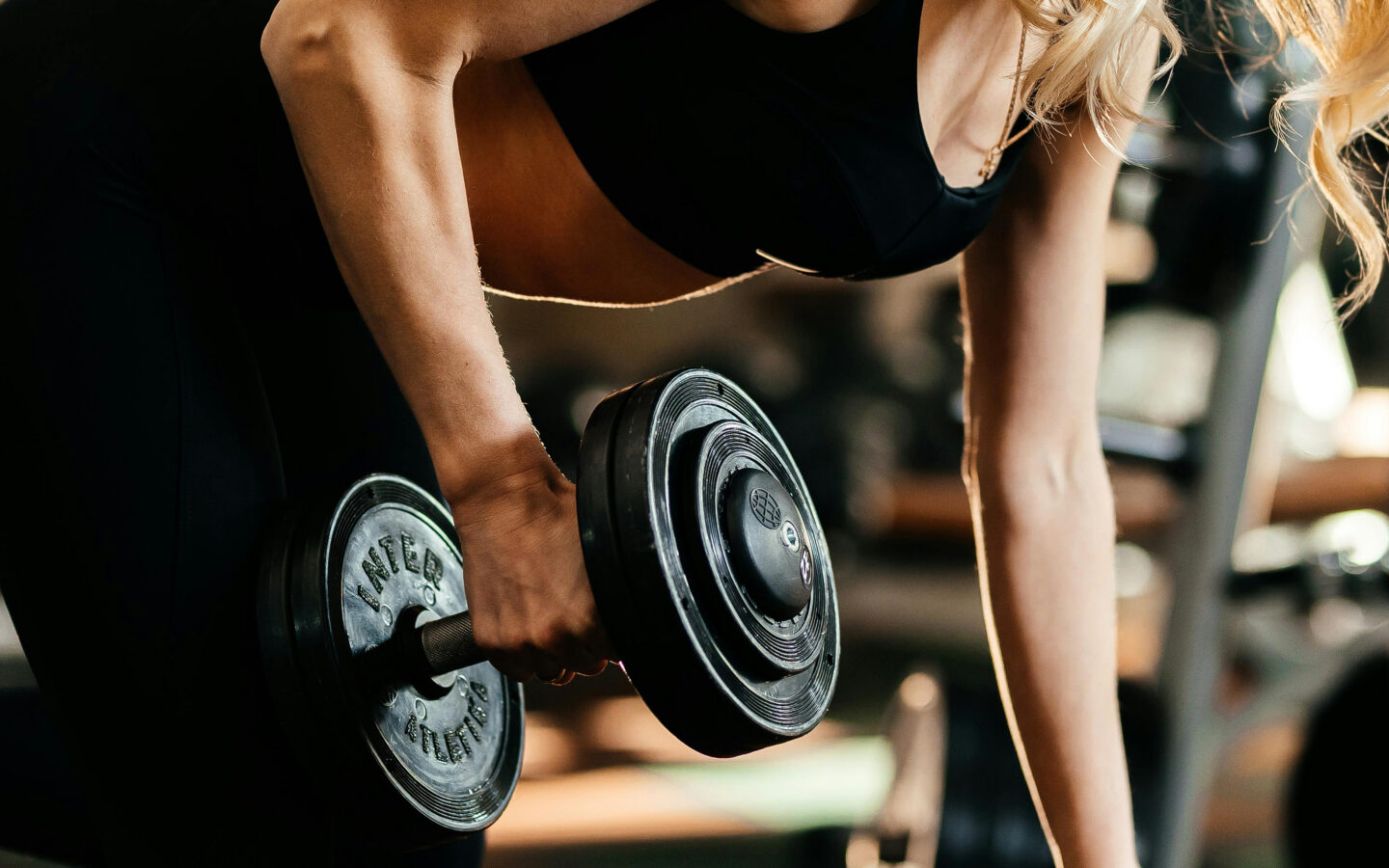
Most workouts are designed for a man’s body. Here’s what actually works for women.
Women are not small men. Exercise physiologist Dr. Stacy Sims has spent two decades making this case and the data backs her up. The female body has its own hormonal architecture, its own relationship to muscle and bone, and its own set of signals for building strength, especially in midlife. Once you understand how those systems actually work, the path forward gets a lot clearer.
Most of what women have been told about exercise was built on research conducted on men. The 150-minute zone 2 recommendation? Studies on men. The fear of “bulking up” from heavy weights? A misunderstanding of male physiology applied to female bodies. The idea that moderate, steady-state cardio is the gold standard? Also men.
And the stakes are real. The difference in mortality is 400% between people with the highest and lowest cardiovascular fitness. For strength, it’s 250%. Movement isn’t a nice-to-have. It’s the single most significant predictor of [helth-span]nounThe number of years you live in good health, free from chronic illness or disability.Learn More: Healthspan and lifespan.
Here’s what the science says women actually need.
Estrogen Is Doing More Than We Thought
Estrogen is the primary anabolic, meaning muscle-building, hormone in women. It promotes osteoblast activity, which builds strong, healthy bones. It also plays a direct role in how muscles contract and grow. For decades, this system ran quietly in the background, doing its job.
Then midlife arrives, and estrogen levels begin to drop.
- Women can lose 10–20% of their bone density in the first five years after menopause.
- They can lose up to 3% of muscle mass per year after age 30.
These aren’t scare tactics, they’re the biological reality that makes the right kind of training non-negotiable.
When estrogen declines, muscles need a different signal to contract forcefully. That signal comes from the brain, through intense neural stimulation. Lifting heavy weights produces that stimulus, triggering the brain to “tell” the muscle to contract with more force. Short bouts of high-intensity training (sprinting, jumping) generate similar neural signals. And those same signals promote and maintain bone health and density.
This is why the standard advice to “just walk more” or “do yoga” isn’t wrong, exactly. It’s just radically incomplete. (For a deeper look at the role of muscle mass in longevity, including [pruh-gres-iv oh-ver-lohd]nounGradually increasing workout intensity to build strength and endurance.Learn More: Progressive Overload strategies and [vee-oh-too maks]nounA measurement of how much oxygen your body can use during exercise.Learn More: VO2 Max training, see The Ultimate Guide to Building Muscle Safely After 40.)
Fitness Myths for Women: What the Science Actually Says
Myth #1: Lifting heavy weights will make me “bulky”
What we have learned is that doing fewer repetitions at a heavier weight actually builds strength over [hy-pur-truh-fee]nounThe increase in muscle size through training.Learn More: Hypertrophy. But, let’s not forget that adding muscle is the point. However, you can mediate the “bulkiness” of muscle gain with the right diet.
Myth # 2: Movement only counts during dedicated periods of exercise
You can power up your day with “exercise snacks”! Because all movement matters. Don’t discredit taking the stairs, doing five air squats between calls, or taking a walking meeting – it all contributes to our well-being and lifespan.
Myth # 3: High-intensity work is “dangerous” for women
For most healthy adults, engaging in high-intensity work is incredibly beneficial. Not only does high-intensity exercise benefit the musculoskeletal system and have positive effects on the brain (especially when we produce lactate, one of the brain’s preferred sources of energy), it also enhances the female metabolism, promoting the usage of glucose and improving [in-suh-lin sen-si-tiv-i-tee]nounHow effectively your body uses insulin, which regulates blood sugar levelsLearn More: Insulin Sensitivity.
Myth #4: Women only need zone 2 exercise
The promotion of 150 minutes of zone 2 exercise comes from studies on men. While ALL movement is beneficial for women to get the most bang for their buck, resistance training and high-intensity training are what truly move the needle for enhancing healthspan. Embrace zone 2 for the mental and social benefits it can provide.
What a Women’s Training Week Actually Looks Like
It’s never too late to start a strength training program, and “lifting heavy” doesn’t happen overnight. Consistency matters more than intensity in the first weeks. Here’s a framework grounded in the research:
Strength sessions, 2–3 times per week. Think six reps with two “in reserve” — meaning you could probably do two more if you really had to. This rep range builds strength without pushing you into unnecessary fatigue.
Polarized training, 2–3 times per week. This is Dr. Stacy Sims’ term for alternating between high-intensity and low-intensity work, with little time in the moderate middle. Options include HIIT (1–2 minutes at 80% max effort, followed by 30–60 seconds recovery, on repeat) or sprint interval training (30 seconds at 100% intensity, followed by 1–2 minutes recovery, repeated five times).
Zone 2 every day for the social and cognitive benefits. Walking, easy cycling, swimming — all at a pace where you can hold a conversation. This supports metabolic health, social connection, and cognitive function, but it’s a complement to strength and intensity work, not a replacement.
Don’t forget moh-bil-i-tee]nounThe ability to move freely and easily through a full range of motion.Learn More: Mobility and flexibility. These can be woven into everyday life: a hip opener while waiting for coffee, a shoulder stretch between meetings. They’re not separate workouts; they’re maintenance.
The earlier you start, the more you access the compound effects of muscle building for your skeletal foundation and bone density. But the research is clear: starting at any point still matters.
Two Strategies Worth Trying
Rucking. Walking, hiking, even doing housework with a weighted vest or backpack provides increased load for bone stimulation. The research on weighted vest use in postmenopausal women goes back decades: a five-year randomized study found that women who did weighted vest plus jumping exercise three times a week maintained hip [bohn min-er-uhl den-si-tee]nounA key indicator of bone strength and fracture risk.Learn More: Bone Mineral Density, while controls lost roughly 3–4% at the femoral neck, trochanter, and total hip over the same period. Rucking also creates an [ek-sen-trik lohd]nounThe lengthening phase of a muscle contraction, important for strength and joint health.Learn More: Eccentric Load — training your body to control deceleration. This matters because we don’t fall “up.” We fall down. Learning to control downhill movement with extra load directly improves your ability to prevent falls.
[bluhd floh]nounThe movement of blood through the circulatory system, delivering oxygen and nutrients to organs and tissues to support energy, healing, and overall health.Learn More: Blood Flow restriction (BFR). An old technology gaining new support, BFR can mimic the effects of lifting heavy without the joint stress. A 2018 systematic review and meta-analysis in Sports Medicine found that low-load BFR training produces meaningful gains in muscle mass and strength in older adults — comparable to conventional heavy resistance training. The mechanism: BFR creates localized metabolic stress that drives acute increases in growth hormone and IGF-1, supports additional pathways for muscle protein synthesis, and may also support cognitive function. Worth exploring if joint issues have been a barrier to heavy lifting.
Try This: The [grip strength]nounA key marker of strength and predictor of longevity.Learn More: Grip Strength Check
Your grip strength is one of the most validated biomarkers of longevity. A recent JAMA study of 5,472 women found a 33% lower mortality risk in the strongest versus weakest group, even after controlling for cardiovascular fitness and physical activity. Here’s a quick self-assessment:
Dead hang test: Find a pull-up bar or sturdy overhead bar. Hang with both hands, arms fully extended. Time yourself.
- 30+ seconds: Strong foundation
- 15–30 seconds: Room to build
- Under 15 seconds: This is where training starts — and that’s useful information
Don’t worry if you struggle. The point isn’t to pass a test. It’s to know where you are so you can build from here.Building muscle safely doesn’t mean doing less, it means working smarter. For women, resistance training takes less time as weights get heavier and reps fewer. With these strategies, you’ll stay strong and injury-free.
The information provided in this article is for educational and informational purposes only and is not intended as health, medical, or financial advice. Do not use this information to diagnose or treat any health condition. Always consult a qualified healthcare provider regarding any questions you may have about a medical condition or health objectives. Read our disclaimers.
Written By:

