

Tight Hips? This New Stretch Is a Biomechanical Upgrade
Photography by Ivona Zivulj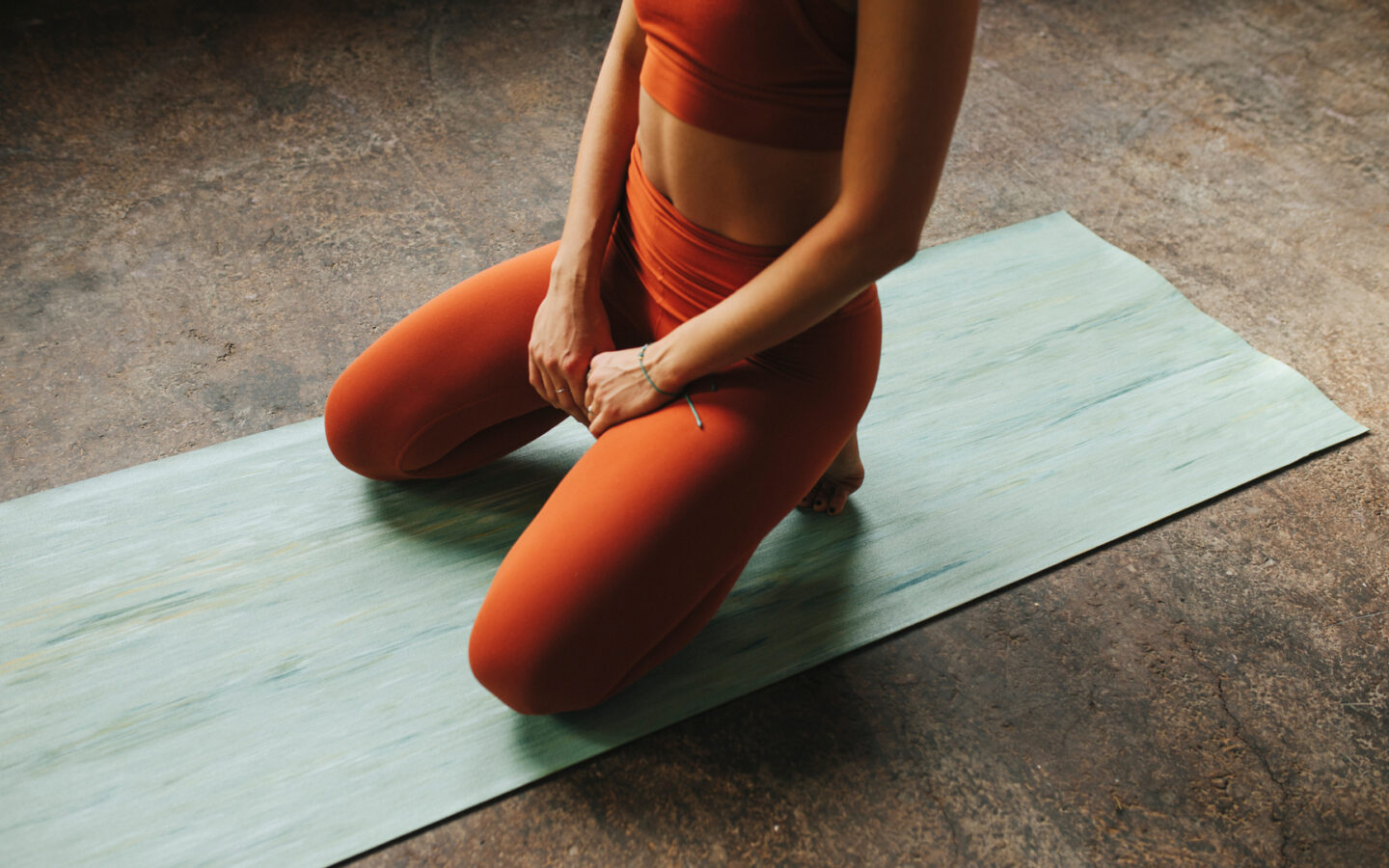
Hip flexibility decreases by 6 degrees every decade in men and 7 degrees in women.
Adding one small adjustment, a posterior pelvic tilt, to a standard hip flexor stretch can radically improve hip flexibility, reduce back strain, and help protect your balance and spine as you age.
This isn’t just a better stretch. It’s a biomechanical upgrade. Tight hip flexors from sitting, stress, or old injuries mess with your moh-bil-i-tee]nounThe ability to move freely and easily through a full range of motion.Learn More, pull your pelvis forward, stressing your spine, and increase your fall risk over time.
Why Hip Mobility Matters
Most of us have been sitting for decades. And the muscles that make that possible (the hip flexors, a group that runs from your lower spine through your pelvis and into your thighs) have quietly adapted to that position. Over time, they shorten. They tighten. They start to pull.
When hip flexors stay chronically shortened, they tug the front of your pelvis downward, tipping it forward into what’s called an anterior pelvic tilt. To compensate, your lower back exaggerates its curve, working overtime to keep you upright. Your stride shortens. Your balance shifts. Things that used to feel automatic, walking, climbing stairs, catching yourself when you stumble, start to require a little more effort than they used to.
None of this happens dramatically. That’s what makes it easy to miss. But the cumulative effect shows up in back pain that won’t quit, a gait that feels less fluid, and a subtle erosion of the physical confidence most people don’t notice until it’s already affecting how they move through the world.
The good news is that this is highly addressable. The right stretch, done with intention, can begin to lengthen what’s been shortened — and start giving your body its range back.
The Problem with the Traditional Hip Stretch
The traditional half-kneeling hip flexor stretch only targets hip extension. But here’s the issue: hip flexors also influence pelvic tilt. Without cueing a posterior tilt, most people compensate with more anterior tilt, which is the very pattern we’re trying to undo.
A 2024 randomized clinical trial published in BMC Musculoskeletal Disorders compared this conventional stretch with a modified version that includes a posterior pelvic tilt (PPT). The results? PPT was significantly more effective at improving hip flexor flexibility, with no negative effect on hamstring range of motion.
The Smarter Way to Stretch Your Hips
In the study, researchers looked at how much the hip flexors resisted movement during a stretch so they could measure how “tight” they were. When peoples used the posterior pelvic tilt (PPT) technique, resistance dropped significantly (by 4.85 Newton-meters), which is enough to count as a real, meaningful improvement in flexibility.
(Quick science break: A Newton-meter is just a way of measuring how much force it takes to move something, like how much your muscles push back when you try to stretch them.)
In plain terms? After using this technique, people’s hip flexors were less stiff and more responsive, making everyday movement easier and more efficient. That’s a big win for your hips, spine, and stride. By consciously tucking the pelvis under and engaging the glutes during the stretch, people were able to achieve:
- Better hip flexor lengthening
- Reduced spine stress
- Safer, deeper stretch activation
How to Do the Posterior Pelvic Tilt Stretch (PPTS)
- Start in a half-kneeling position with your right knee on the ground, left foot forward, both knees at approximately 90 degrees.
- Before you move, tuck your pelvis: squeeze your glutes and draw your pubic bone upward and forward, actively flattening the curve of your lower back. This is your posterior pelvic tilt.
- Holding that tuck, shift your hips forward gently toward your front foot. Let the movement come from your hips advancing, not from your lower back arching.
- You should feel a deeper stretch in the front of the hip of your back (kneeling) leg than you would in the standard stretch.
- Hold for 20–30 seconds. Keep your torso upright. Imagine stacking your head, shoulders, and ribs directly over your hips.
- Repeat on both sides, 2–3 times per side.
How to know you’re doing it right:
- Your lower back should feel flat or slightly flattened, not arched
- You’ll feel your glutes and low abs engaged throughout (not just a passive hip stretch)
- The stretch will feel deeper in the front of the hip than the standard version
- Your torso stays tall with no forward lean or rib flare
How to know you’ve lost it:
- Your lower back starts to arch (you’ve lost the posterior tilt)
- You feel the stretch mostly in your thigh rather than deep in the hip crease
- Your ribs drift forward of your hips
One cue that helps: Think “tuck, then travel.” Get the pelvic tuck first, then advance the hips. Most people do it in the wrong order, they move forward and try to tuck after the fact, which doesn’t work.
This one simple adjustment to your stretch routine could help protect your posture, prevent injuries, and keep you moving like you mean it for decades to come.
Read This Next
The information provided in this article is for educational and informational purposes only and is not intended as health, medical, or financial advice. Do not use this information to diagnose or treat any health condition. Always consult a qualified healthcare provider regarding any questions you may have about a medical condition or health objectives. Read our disclaimers.
Written By:
