

The Biological Reason Women Should Travel Together
Jordi Rullo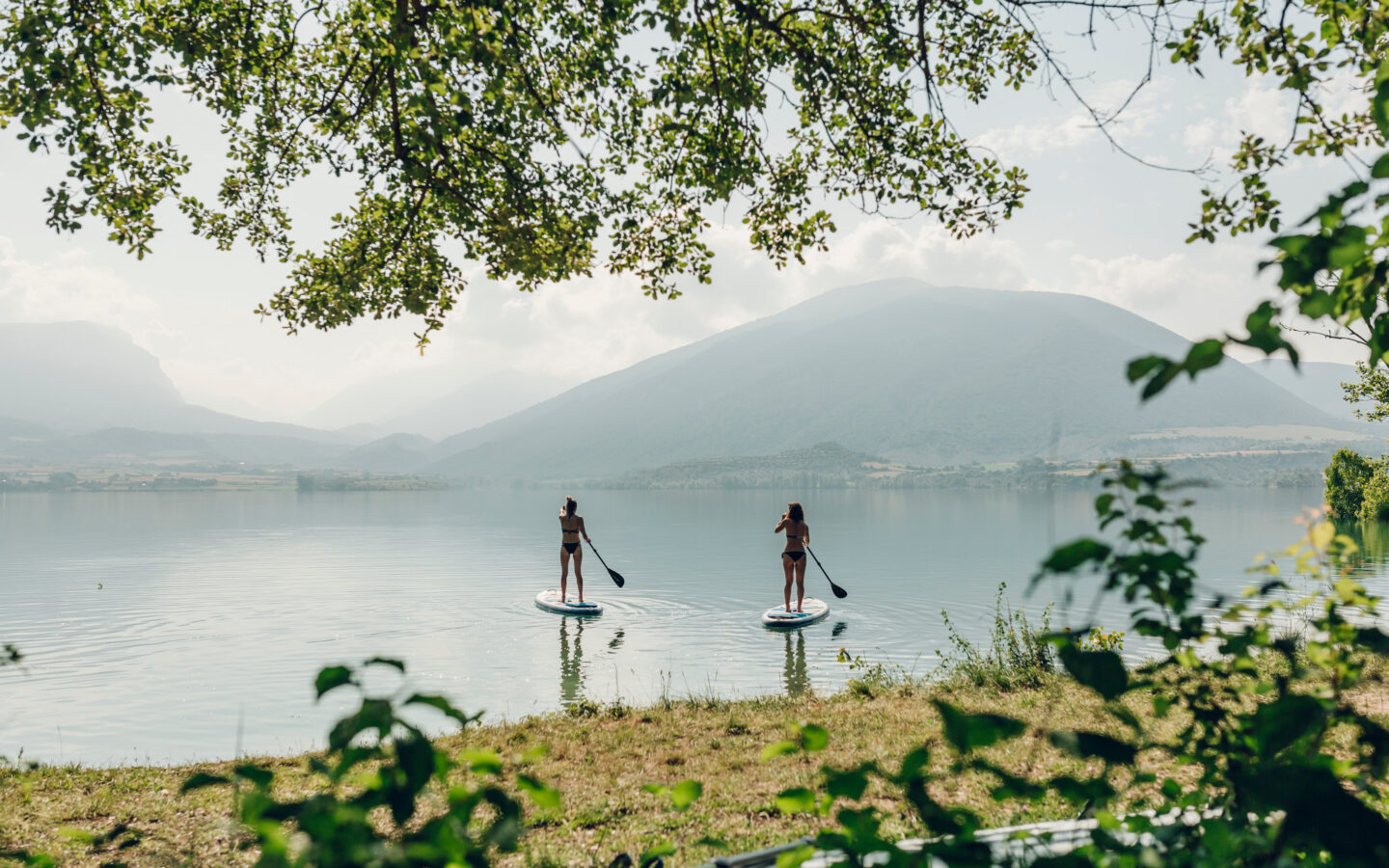
Women who travel together live longer, healthier lives.
Years ago, I was hiking out of the Grand Canyon after camping at the base by the river. The second half of the climb is pure switchbacks where you can see the path ahead at your shoulder level, but you have to travel down and make a sharp turn back just to gain four feet of elevation.
I was gutting it out, stopping every few switchbacks to catch my breath and drink water before pushing forward again. Each time I stopped, two women who looked to be in their late 60s would slowly pass me by, smiling, casually talking and laughing together. After the third time I powered past them only to have them cruise by while I was leaning on the cliffside catching my breath, I finally asked if I could hike out with them.
They said yes, of course. I learned they were best friends who lived far apart but took hiking trips together twice a year. We talked, we laughed, we got to know each other, and before I knew it, we were climbing the last half mile out of the canyon. I didn’t have to stop once.
Ever since that moment, my goal has been to be those women. Deep friendships, adventure, and the ability to casually hike out of the Grand Canyon at 70. Yes, please.
It turns out there’s real science behind what happened on that trail and it goes far beyond pacing. When women join together in unfamiliar places, whether it’s hiking trails, kayaking coastlines, or sitting around a table in a country where nothing is familiar, a unique, biological connection occurs. Researchers call it tend-and-befriend: a unique way that women handle novel situations, turning them into moments of connection, courage, and reciprocity.
What Happens When Women Travel Together
In 2000, UCLA psychologist Dr. Shelley Taylor upended decades of research with a simple observation: when faced with something unfamiliar or challenging, women don’t just fight or flee. They reach for each other. The mechanism is oxytocin, a hormone that promotes bonding and calms the nervous system. The harder the situation, the more women’s biology drives them toward alliance.
More than comfort, this can build courage. A 2022 review in Philosophical Transactions of the Royal Society B found that women’s friendships are uniquely high in mutual support and self-disclosure, and that women are more effective at both giving and receiving that support. The Harvard Nurses’ Health Study confirmed the stakes: women with strong social ties have lower blood pressure, reduced [in-fluh-mey-shuhn]nounYour body’s response to an illness, injury or something that doesn’t belong in your body (like germs or toxic chemicals).Learn More, and better overall health outcomes. Women without close connections face health risks comparable to smoking and obesity.
Women don’t just draw strength from the group, they generate it for each other. Research on women-only outdoor programs shows that in all-female groups, women report increased physical confidence and willingness to take risks they may not have faced alone. Those two women on the switchbacks were each other’s regulate-and-rise system and the moment they let me in, I became part of it too.
Group Travel Makes Women Stronger
Shared emotionally intense experiences rapidly build prosocial bonds, even between strangers, especially when people are paying attention to the same thing at the same time, according to a 2024 study in Royal Society Open Science. That’s exactly what happens when a group of women who’ve never met adventure together. The unfamiliarity strips away the roles and the polite distance, and creates space for something real. Something biologically potent.
Research from Edith Cowan University found that positive travel experiences help the body maintain a low-entropy state, slowing biological wear and tear. And UC Berkeley research co-authored by Dr. Dacher Keltner found that [aw]nounA powerful emotion of wonder that enhances well-being and connection.Learn More, the kind triggered by spectacular, unfamiliar landscapes, is one of the strongest predictors of lower pro-inflammatory cytokines among all positive emotions studied. When women travel to places that take their breath away, they’re reducing inflammation, rewiring what they believe they’re capable of, and building connections that support their [lon-jev-i-tee]nounLiving a long life; influenced by genetics, environment, and lifestyle.Learn More.
Put Women in Extraordinary Places
Judi Wineland has watched all of this unfold for decades. The co-owner of AdventureWomen (with her two daughters) has built a company around one powerful idea: put women in extraordinary places, give them something hard to do, and what emerges is the pure alchemy of joy, untapped potential, and camaraderie.
“Women come onto these trips oftentimes by themselves,” Wineland says. “None of us knows each other or our histories. We have these wonderful conversations and we laugh a lot because we go out and challenge ourselves but we’re not always successful. But instead of feeling defeated, we laugh with each other. It brings back a lot of those feelings of who you were as a kid. You have the chance to play, to be more real about who you are.”
That playfulness and laughter is reciprocity, permission to try the hard things and fail in the company of women who won’t let you shrink. Wineland, 75, names the only prerequisite: “You have to be a little bit vulnerable to allow yourself to be open, to allow others in, to allow the earth in.” The awe researchers would approve of that sentiment.
Try This: Turn Your Next Ladies’ Trip Into a Longevity Retreat
You don’t need a passport to activate tend-and-befriend, but you do need to get out of your routine, find something that makes you feel slightly uncomfortable, and do it alongside women you trust (or even women you haven’t met yet).
This week, reach out to one woman and propose something you’d normally talk yourself out of. A trail you’ve been eyeing. A weekend somewhere new. A class where you’ll both be beginners. Connection isn’t a nice-to-have. It’s medicine. It fuels courage and possibility.
And if you’re looking for the full experience, movement, awe, challenge, and women you haven’t met yet, Super Age is partnering with AdventureWomen on three immersive trips built around this science. We’ll be traveling with them, leading awe walk practices rooted in the awe research from UC Berkeley’s Greater Good Science Center.
Years ago, when I was editor-in-chief of Mindful, Dacher and I created the awe walk protocol together, a practice designed to shift your nervous system from doing to noticing, from rushing to receiving. It changed how I move through the world, and it’s now part of every Super Age immersion with AdventureWomen. Come walk with us. Explore the Super Age Immersions.
Read This Next
The information provided in this article is for educational and informational purposes only and is not intended as health, medical, or financial advice. Do not use this information to diagnose or treat any health condition. Always consult a qualified healthcare provider regarding any questions you may have about a medical condition or health objectives. Read our disclaimers.
Written By:
