

Scientists Measured The Brain Effects of Forest Bathing. These Are the 5 Things They Learned
Not all time spent in nature constitutes forest bathing. Here’s how to build a practice.
There’s lots to love about Brooklyn, where I was raised and currently reside. The architecture, for one, and the walkability — I’ll never get tired of strolling down a sun-dappled Brownstone block with a perfect cup of coffee in my hand. But my second favorite thing after living in Brooklyn is leaving it for greener spaces. This week, I’m in upstate New York for my kids’ spring break, and I have just one thing on the agenda: to get out into nature.
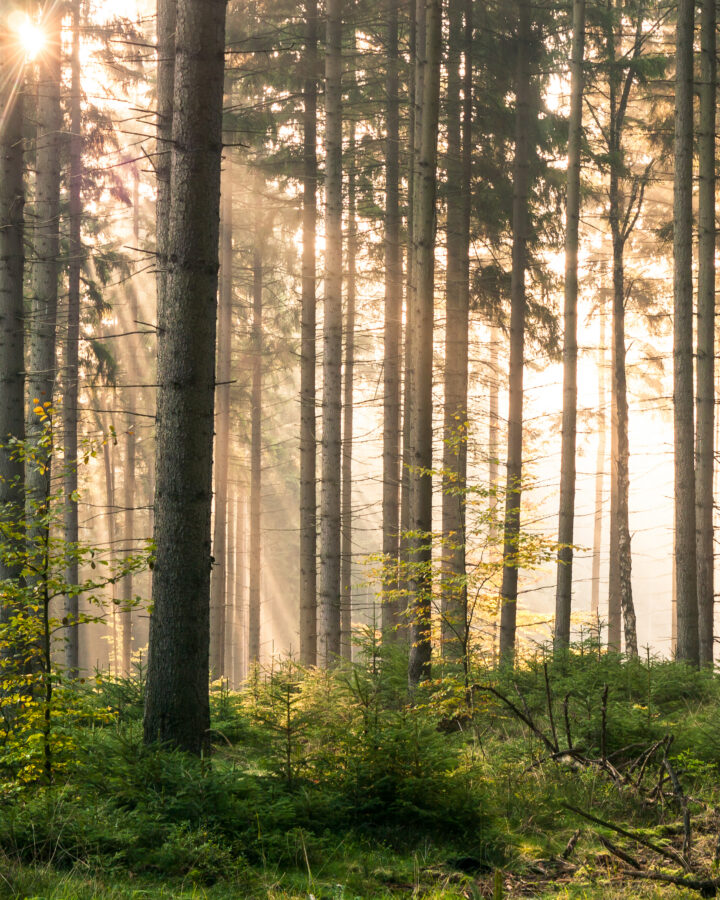
Situated just over the Vermont border, this area is blessed with a bounty of evergreen trees that punctuate a striking landscape. I intend to soak it all up — the colors, the scents, the textures — with every one of my senses.
A new study in last month’s Frontiers in Psychology shows that this could be exactly what my brain wants and needs. And yours, too. The researchers followed a small cohort of stressed out medical students and found that “forest bathing” — distinct from a hike or simply existing in natural spaces — can have some surprising effects on brain function, mood, and more.
In total, they identified five key features of your brain in nature, as measured by brain imaging and facial expression technologies. This adds to a growing body of research which suggests it’s always a good idea to embrace the great outdoors with a greater sense of intention.
What Is Forest Bathing, Exactly?
Being immersed in nature is of course as old as time. But in 1982, Tomohide Akiyama, director of Japan’s forestry agency, coined the term “forest bathing” (shinrin-yoku in Japanese) to represent a more deliberate practice.
The idea was first conceived as a reprieve from the technology of the time. Now that tech has seeped into virtually every aspect of our lives — a far cry from the 8-bit computers of that bygone era — it’s easy to see why the concept is once again having a moment.
According to the Cleveland Clinic, there are three core concepts that distinguish forest bathing from a typical trek through the woods: yūgen, komorebi and wabi sabi.
- Yūgen captures the experience of perceiving the world’s beauty so profoundly that the emotions it stirs exist beyond the reach of language. Some might call this having a sense of [aw]nounA powerful emotion of wonder that enhances well-being and connection.Learn More.
- Komorebi‘s literal translation is “sunlight leaking through trees,” pointing to the dance between rays of light and foliage — a balanced interplay of light and shadow.
- Wabi sabi finds value in what is flawed and fleeting. With a focus on asymmetry, simplicity, and natural beauty, we’re reminded by wabi sabi to embrace the imperfect, impermanent, and incomplete.
By allowing these principles to guide your time outdoors, you won’t just enjoy your time in nature more. You’re also likely to reap bigger benefits.
Forest Bathing Boosts Your Health — Here’s How
Before we break down the present study on the brain benefits of forest bathing, it’s helpful to understand where the current literature stands. Mounting research suggests that forest bathing comes with a wide range of benefits for your [helth-span]nounThe number of years you live in good health, free from chronic illness or disability.Learn More.
Anti-Cancer Benefits In February, a narrative review of peer-reviewed studies analyzed the physiological effects of forest bathing and found that time spent in forest environments is linked to increased natural killer cell activity and healthier inflammatory responses, both of which can activate the body’s immune system to help fight cancer cells.
Lower Stress That same study found that forest bathing is also linked to lower [kawr-tuh-sawl]nounA hormone that helps manage stress, energy, and alertness.Learn More levels and activation of the [par-uh-sim-puh-thet-ik nur-vuhs sis-tem]nounThe part of your nervous system that supports relaxation and digestion.Learn More, which calms us after stressful events. Amazingly, the effects aren’t psychosomatic. They appear to be driven, at least in part, by phytoncides and other volatile organic compounds released by trees. This happens via multiple pathways, “potentially mediated by bi-directional neuro-immune and metabolic–endocrine interactions,” the study authors write.
Improved [hahrt helth]nounThe overall condition and function of the cardiovascular system, including blood pressure, cholesterol, and arterial health; critical for longevity and disease prevention.Learn More A separate 2017 study used pulse rate monitors, portable blood pressure cuffs, heart rate variability (HRV) monitors, and mood state surveys to measure heart rate, blood pressure, fluctuations of time between heartbeats, and mental state before and after a two-hour guided walk through nature. The researchers found that forest bathing can boost cardiovascular function in middle-aged and older adults by lowering heart rate, as well as diastolic and systolic blood pressure.
More Sleep and Less Fatigue That study also notes that forest bathing is linked with increased cognitive function and mood. This translates to “recovery from fatigue, reflected in increased vigor, decreased fatigue, improved subjective sleep quality,” and more.
Better Mood That study further found that intentional time in nature results in “stress reductions in tension, anger, depression, and confusion, and lower anxiety levels.” In agreement, a 2025 study on the mental health benefits of forest bathing went so far as to describe the practice as a potential “non-pharmacological treatment for mental health in the general population.”
5 Ways Forest Bathing Rewires Your Brain
Adding to an already robust body of research, this new Frontiers in Psychology study shows that there are several neurological benefits to short-term forest bathing.
For the study, the team recruited 60 stressed out medical undergrads as they prepared for their final exams. The students were split into two groups — one assigned a forest bathing intervention, and the other remaining in a city environment.
The researchers employed near-infrared functional brain imaging and facial expression technology. They measured [bluhd floh]nounThe movement of blood through the circulatory system, delivering oxygen and nutrients to organs and tissues to support energy, healing, and overall health.Learn More in the prefrontal cortex (PFC) — the part of your brain involved in stress, decision-making, and emotion. They noted changes in physiological functions, and psychological changes under specific tasks.
The team ultimately found that a two hour forest bathing session had five key effects on the brain. Compared to the control group, the nature intervention group displayed:
- Reduced physiological stress markers
- Enhanced nature connectedness and positive emotions
- Alleviated stress via modified cerebral blood flow
- Improved memory
- Reduced cognitive fatigue
When they then put both groups through a stress test (this involved public speaking and mental math under pressure), the forest group’s prefrontal cortex actually quieted down, while the city groups’ became more active. This matters because an overactive prefrontal cortex during stress is associated with anxiety and rumination. The forest group’s brains were notably less rattled. Better able to meet the moment. Happier overall.
How We Should Understand the Findings
Dr. Katlyn Nemani, MD, assistant research professor of psychiatry and neurology at NYU Grossman School of Medicine, says there are several plausible pathways connecting forest exposure to the brain and these particular cognitive outcomes.
“The most direct is the stress axis. Forest environments appear to shift the autonomic nervous system away from sympathetic (fight-or-flight) dominance toward parasympathetic activation. This study found that two hours in a forest reduced heart rate and salivary cortisol, the hormone most directly tied to the body’s stress response. When cortisol comes down, the prefrontal cortex — the brain region responsible for executive function, emotional regulation, and working memory — doesn’t have to work as hard to keep you regulated,” she tells Super Age.
This is exactly what the brain scans revealed, Dr. Nemani says. When faced with a stressful activity, people who had spent time forest bathing showed reduced oxygenated hemoglobin levels across multiple areas of the prefrontal cortex. Put plainly, their brains were managing an identical stressor while expending less energy. The mental benefits observed — improved working memory, reduced cognitive fatigue, and the rest — are most likely a result of that newly available prefrontal capacity.
“There’s also an attentional mechanism,” she adds. “Natural environments engage what psychologists call ‘soft fascination’ — things like rustling leaves or dappled light capture your attention gently without demanding concentration. This gives the brain’s directed-attention networks a chance to rest, which is why people often feel mentally sharper after time in nature.”
Should I Trust the Results?
Dr. Majid Fotuhi, MD, PhD, a neurologist and USA Today bestselling author of The Invincible Brain: The Clinically Proven Plan to Age-Proof Your Brain and Stay Sharp for Life, says the latest findings align with what we already know about the brain in nature. He notes that when stress is reduced, the brain is no longer preoccupied with threat monitoring. “It can redirect its energy toward thinking, learning, and remembering. At the same time, nature reduces sensory overload. Instead of constant noise, screens, and distractions, the brain experiences a calmer, more predictable environment. This allows mental fatigue to dissipate and cognitive performance to improve,” he says.
The neurologist, also a professor at Johns Hopkins’s Mind/Brain Institute, notes that this study has several strengths, including a randomized design comparing a forest setting to an urban environment and the use of multiple outcome measures. Dr. Nemani notes another asset: “I appreciate that they combined brain imaging with physiological and psychological measures — most forest bathing research relies on questionnaires alone.”
However, the experts agree that there are a few caveats worth keeping in mind. The people were all medical students — a small and specific group — so it’s hard to say whether the same results would show up in a more diverse population. The gender balance was off, too. The time spent in each environment was short, and researchers didn’t check back in to see whether the benefits lasted. Cortisol naturally rises and falls throughout the day, which can complicate what the numbers actually mean. The researchers also didn’t measure heart rate variability, a more precise window into how the nervous system is responding to stress.
Taken alone, the results should be viewed as “supportive rather than definitive,” Dr. Fotuhi says. However, viewed as one of several brain imaging studies on the subject, the trends certainly point toward ample brain benefits following exposure to natural environments.
“From a broader perspective, this fits into a simple principle,” Dr. Fotuhi says. “The brain functions best when it is not overwhelmed. Nature helps restore that balance by reducing stress and allowing cognitive systems to recover.”
How to Reap the Biggest Benefits of Forest Bathing
Long before lacing up for a trail hike or settling in for a mountaintop meditation, Dr. Fotuhi says your everyday habits lay the foundation for neurological and [kog-ni-tiv helth]nounThe ability to think, learn, and remember clearly as you age, supported by brain structure, function, and lifestyle factors like sleep, diet, and exercise.Learn More.
“Forest bathing is helpful, but it’s not a standalone solution. In my work, I emphasize five pillars
of brain health: exercise, diet, sleep, stress reduction, and brain training. Nature exposure strengthens several of these pillars at once. That is why it can be such a powerful addition to a comprehensive brain health strategy,” he contends.
Once you’ve ventured out into the great outdoors, there are a few ways to ensure you’re really forest bathing, not just spending time outside. For one, it pays to revisit the three core principles: yūgen, komorebi, and wabi sabi. This could mean leaning into small moments of awe, paying attention to light patterns, or reveling in nature’s imperfections.
Aiming for a full sensory experience can foster a more meaningful practice. A 2017 study described its own guided forest bathing program as emphasizing “visual (e.g., scenery), auditory (e.g., the sound of running streams or birds singing), olfactory (e.g., the smell of wood), and tactile (e.g., feeling the surfaces of leaves and trees)” stimulation.
“To get the most benefit, you have to approach it intentionally,” advises Dr. Fotuhi. “Slow down and be present. Put your phone away. Engage your senses — listen to the sounds around you, notice the light, the colors, and the movement.”
He suggests committing enough time for your body to shift into a calmer state — ideally at least 30 to 60 minutes per session. The doctor recommends combining it with physical activity such as walking or biking “to engage both the exercise and stress reduction pillars at the same time.”
Next, make forest bathing a regular habit. “Just like exercise or sleep, the benefits of nature exposure build over time,” Dr. Fotuhi says. “When you consistently give your brain the opportunity to reset, you create a stronger foundation for long-term cognitive health.”
“Finally, try not to use the walk as a time to problem-solve or plan,” says Dr. Nemani. “The cognitive benefits seem to come specifically from allowing the mind to wander without a goal — what researchers call soft fascination. That unstructured mental state is what allows the prefrontal cortex to actually recover.”
Read This Next
The information provided in this article is for educational and informational purposes only and is not intended as health, medical, or financial advice. Do not use this information to diagnose or treat any health condition. Always consult a qualified healthcare provider regarding any questions you may have about a medical condition or health objectives. Read our disclaimers.
Written By:
