

Sleep Trouble? Get Out of Bed, Says Sleep Scientist
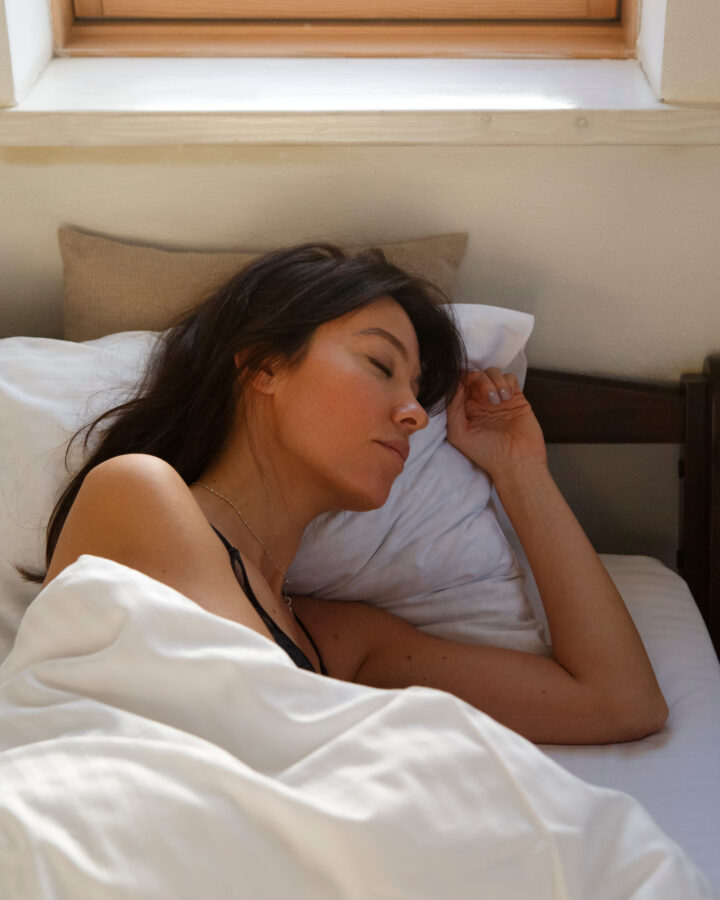
Great sleep is the new great sex
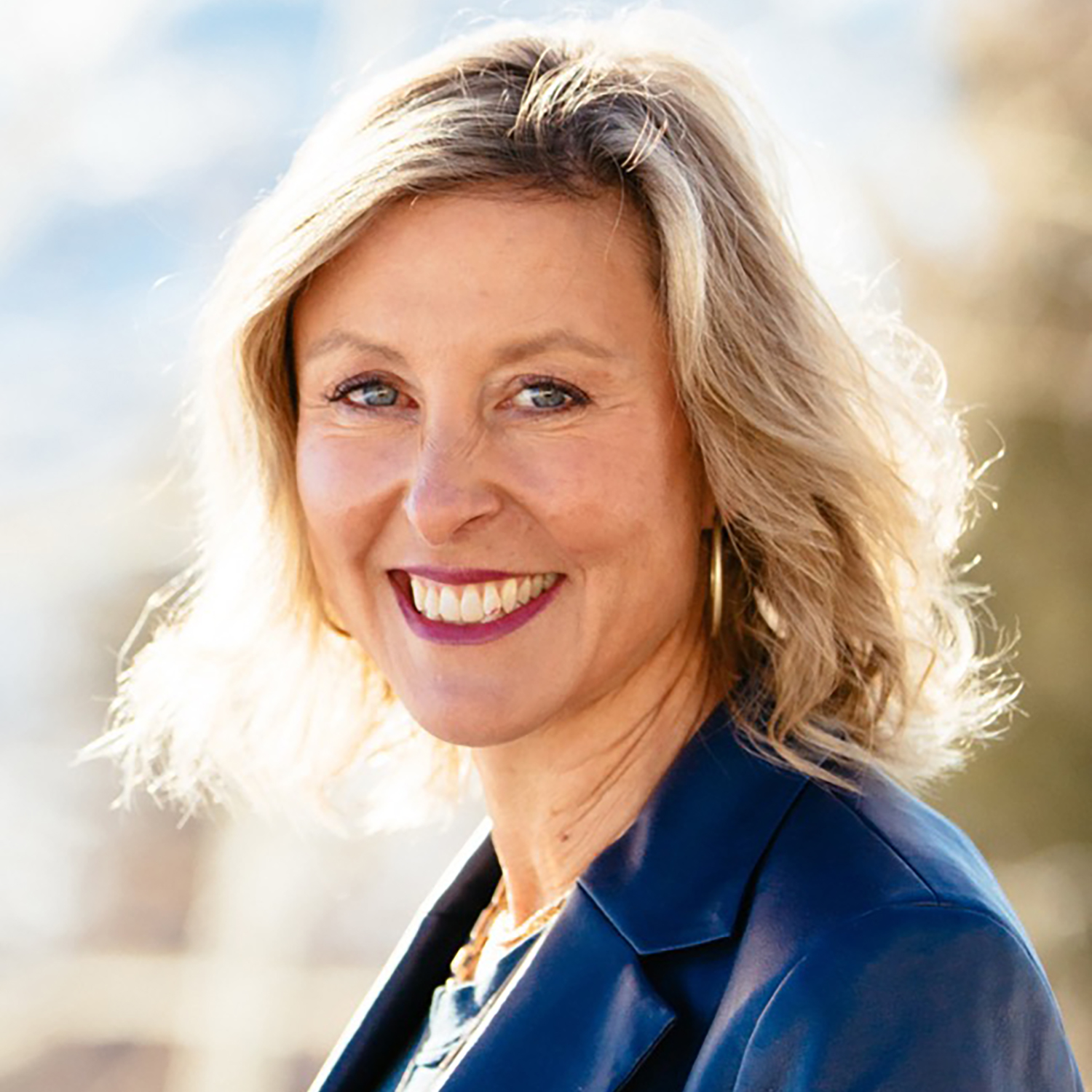
Wendy Troxel, PhD, has spent more than 20 years studying sleep as something shaped by our relationships, our neighborhoods, and even public policy. A senior behavioral scientist at the RAND Corporation, licensed clinical psychologist, and author of Sharing the Covers: Every Couple’s Guide to Better Sleep, she’s the researcher Arianna Huffington called one of the five most influential people in sleep. Her work has been funded by the NIH and Department of Defense, and when she says “great sleep is the new great sex,” she means it. Her clinical practice centers on the reality that most adults share a bed, and almost no one talks about what that does to their rest.
Off the clock, Troxel lives in Park City, Utah, where her non-negotiables are family, sleep, exercise, and sunshine, in that order. She’s an avid runner who logs miles in the snow with her dogs, and a mother of a teenager (which inspired her TEDx talk on adolescent sleep and school start times that helped change policy in California and school districts across the country). We talked to her about why sleep isn’t a discipline problem, what to do when your partner’s snoring is quietly wrecking your relationship, and the one counterintuitive cognitive behavioral therapy principle that might finally help you fall back asleep at 3 a.m.
“Often, the most effective sleep advice is the opposite of what our instincts tell us.”
You Can’t Think Your Way Out of Bad Sleep: A Q&A with Dr. Wendy Troxel
Heather Hurlock (HH): You’ve spent your career studying sleep not just as a biological event, but as something shaped by our relationships, our neighborhoods, even public policy. For readers who think of sleep as purely a personal discipline problem that they’re failing at, how does your perspective reframe change what’s possible?
Wendy Troxel (WT): Sleep doesn’t happen in a vacuum. It’s influenced by who you share a bed with, how safe your neighborhood feels, how early your school or workday starts, even how connected you feel to others. When we stop seeing sleep as a moral failing and start seeing it as something embedded in our social world, it opens up new solutions. Instead of just trying harder, we can adjust routines as a couple, advocate for healthier work and school schedules, or create small environmental changes that make sleep more likely. Moving from a state of blame to context, is often the first step in compassion towards self and others, and can be the first step to nurturing a healthier relationship with sleep.
HH: Most busy adults know they should “sleep better” but are stuck in a cycle of late nights, early alarms, work/life drift, doomscrolling, and weekend chore catch-up. From what you see in your research and clinical practice, what’s the most common pattern that keeps otherwise healthy, motivated people trapped in bad sleep, and what’s the first thing you’d change?
WT: The most common pattern I see in otherwise healthy, motivated adults is the belief that sleep is what happens after everything else is done. Work, kids, emails, doomscrolling, just one more show… Sleep becomes the leftover space at the end of the day. But the truth is, there will always be one more thing. When sleep is treated as optional or earned, it gets squeezed out.
The first shift I encourage is a mindset shift. Instead of asking, “How do I fit sleep in?” ask, “What has to move so sleep is protected?” Even a modest boundary around bedtime, like making it a non-negotiable that phones are set aside at least 10 minutes before lights out, can change the entire rhythm of a week.
HH: You coined the phrase “great sleep is the new great sex,” and your book Sharing the Coverstackles something many sleep experts ignore: that a lot of adults share a bed. What’s the most common sleep-and-relationship pattern you see in your clinical practice, and what’s the first thing you tell couples who are stuck in it?
WT: In my clinical work with couples, I see every day how profoundly sharing a bed shapes both sleep and the emotional climate of a relationship. By the time many couples arrive in my office, sleep has quietly become loaded with tension. One partner is cast as the snorer, the restless one, the “bad sleeper,” while the other feels chronically exhausted, resentful, and unheard. They’re both depleted, and they’re often locked in a subtle cycle of blame that spills into daytime interactions.
The first thing I tell them is simple: sleep is a team sport. I invite them to shift from “me versus you” to “us versus the problem,” which immediately softens the dynamic. From there, we work collaboratively, adjusting schedules, reshaping bedtime routines, renegotiating space, or even considering a temporary “sleep divorce” without stigma. Protecting sleep and protecting the relationship go hand in hand, but it requires honest communication and an appreciation for how much meaning and symbolism is wrapped up in the “marital bed.”
HH: Sleep trackers are everywhere (Oura rings, Apple Watch, WHOOP). You’ve spoken about “orthosomnia,” the phenomenon of sleep anxiety driven by tracker data. For a reader who checks their sleep score every morning and feels defeated by the number, what’s the healthier relationship with that data?
WT: Wearables can be incredibly useful when we use them the right way. I encourage people to think of them as tools for spotting patterns over time, not grading a single night. They’re especially helpful when you’re experimenting with a behavior change, like cutting back on alcohol, setting a more consistent wake-up time, or winding down earlier. Looking at changes in your own data (not in comparison to others) over time, in relation to a specific behavior change, is a great use of the data!
The trouble starts when the tracker becomes a nightly report card. No one likes a failing grade on a report card, and sometimes those nightly sleep scores can make us feel like we are failing, which can lead to increased anxiety and more restless nights. Used with curiosity and perspective, trackers can support better sleep. Used as a judgment, they often undermine it.
HH: You specialize in CBT-I (cognitive behavioral therapy for insomnia) which research consistently shows outperforms medication. If someone is lying awake tonight, unable to sleep, what’s the one behavioral principle from CBT-I that would surprise them and actually help?
WT: One CBT-I principle that often surprises people is this: if you can’t sleep, get out of bed.
I know it feels counterintuitive (and painful) — especially if you wake up at 3 or 4 a.m. and can’t fall back to sleep. Many people think that even if they aren’t sleeping, they are at least getting “rest.” But rest and sleep are qualitatively different states. Rest doesn’t provide nearly the same physiological recovery that sleep does. Lying in bed awake also typically leads to thinking, worrying, and stressing about not sleeping. Over time, the bed becomes associated with frustration and wakefulness rather than sleep.
The way to break this habit is simple: if you’re awake for 20–30 minutes (without checking the clock), get up, keep the lights low, and do something quiet and relaxing until you feel sleepy again, like reading or listening to relaxing music. This retrains your brain to link the bed with sleep, not wakefulness. Often, the most effective sleep advice is the opposite of what our instincts tell us.
HH: Can you share a CBT-I practice that we can offer our readers?
WT: Yes! This is called the RISE technique. It’s an important way to start your day because wake-ups are so critical for setting you up for sleep success that night.
HH: One more thing, can you tell us what you’re planning with the Canyon Ranch Sleep Reset retreat? What are you most excited about?
WT: For anyone interested in diving deeper, I’m so excited to be collaborating with Super Age and Canyon Ranch for an upcoming event on sleep, [lon-jev-i-tee]nounLiving a long life; influenced by genetics, environment, and lifestyle.Learn More, and couples’ sleep. These days, everyone seems to think they’re a sleep expert just because they sleep — but I’ve spent the past 20 years of my waking life thinking about, studying, and helping people sleep better. I’ve worked with individuals, couples, families, and organizations to create meaningful change.
I not only know the science inside and out, but as a clinical psychologist, I understand how to help people turn that science into practical, achievable behavior changes. There will also be plenty of time to get your burning questions answered about your own sleep. I hope you’ll join us for an engaging, inspiring, and science-backed retreat. You’ll walk away with strategies that can truly improve your sleep, your relationships, and your life.
READ THIS NEXT
The information provided in this article is for educational and informational purposes only and is not intended as health, medical, or financial advice. Do not use this information to diagnose or treat any health condition. Always consult a qualified healthcare provider regarding any questions you may have about a medical condition or health objectives. Read our disclaimers.
Written By:

