

The Happiness Data That Flips the Script on Aging
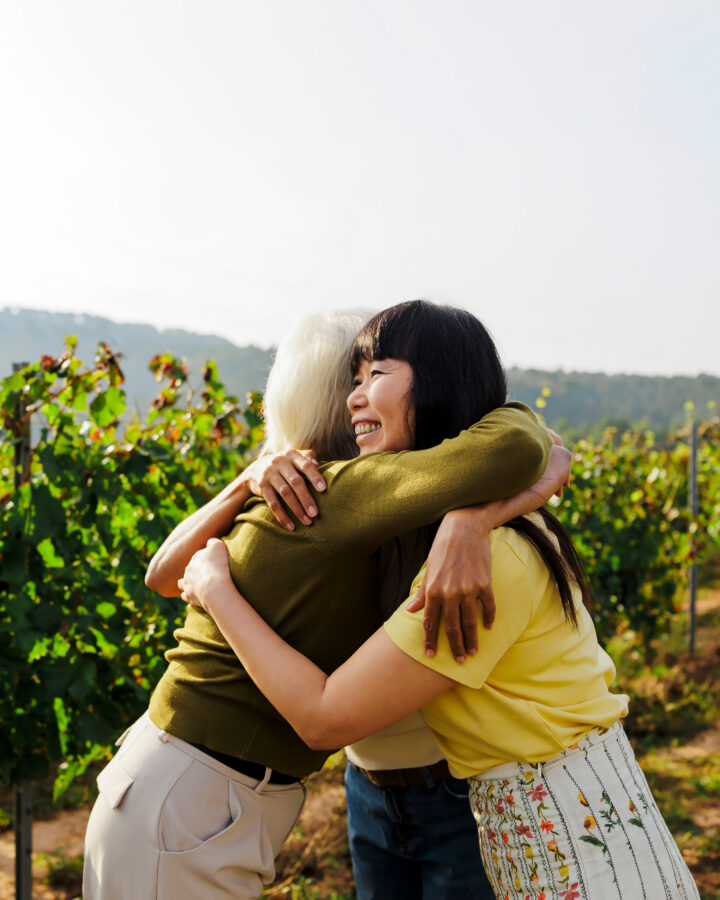
The 2026 World Happiness Report confirms something worth paying attention to.
Every year, the World Happiness Report generates the same cycle of headlines: Finland is still number one, the Nordics are still dominant, and the rest of us are left wondering when we’ll have a real conversation about social safety nets.
Finland isn’t happy because of some cultural secret or mysterious Nordic temperament. Finns have universal healthcare, free education through doctoral programs, subsidized childcare, generous parental leave for both parents, publicly funded elder care, and a social safety net designed to make sure no one falls through. These countries didn’t stumble into happiness. They built the infrastructure for it. That context matters, because this year’s report tells us something important about what happens when that kind of infrastructure exists, and what happens when it doesn’t.
But the deeper finding, the one that didn’t make the headlines, is simpler and more far-reaching: the building blocks of happiness are the same at every age. Trust, social support, a sense of purpose, freedom to make your own choices, connection to people who matter. The report’s data confirms these factors again and again. They predict wellbeing whether you’re 22 or 72.
The Generational Happiness Gap Is Real, and It’s Not About Age
The report found that in 85 of 136 countries, people under 25 are happier now than they were 20 years ago. That’s the good news. The troubling part: in the United States, Canada, Australia, and New Zealand, life evaluations for under-25s have dropped by nearly a full point on a 10-point scale over the same period. That’s a significant decline, concentrated in some of the world’s wealthiest countries.
At the same time, adults born before 1965 report life evaluations about a quarter of a point higher than those born after 1980. Among Boomers, life satisfaction actually increases with each year of age. Among Millennials, it declines. (Cue Boomer memes and rants.)
But this isn’t a story about one generation doing better than another. It’s a story about what’s being lost. The factors driving the decline among younger people in these countries aren’t mysterious: eroding social trust, rising loneliness, fewer in-person friendships, and a digital environment that often substitutes for connection without actually providing it. These are the same factors the happiness report has identified, year after year, as the foundations of wellbeing at every stage of life.
When younger people lose access to trust and connection, their happiness falls. When older adults maintain it, theirs holds. The variable is the infrastructure of relationships.
What Social Media Actually Does (And Doesn’t Do) For Your Happiness
The 2026 report devoted seven chapters to social media and wellbeing, and the findings are more nuanced than most coverage suggests.
The estimated relationship between internet use and wellbeing differs significantly by generation: highly negative for Gen Z, moderately negative for Millennials, close to neutral for Gen X, and slightly positive for Baby Boomers. But the report is careful to note that this isn’t because older adults are somehow immune to technology. It’s because they tend to use it differently, more intentionally, more selectively, and within the context of relationships that already exist offline.
The most useful distinction in the data: not all platforms are the same. The report found that the most problematic platforms are those built around algorithmic feeds, influencer content, and visual material that encourages social comparison (think scrolling TikTok, Instagram, or YouTube recommendations). Platforms whose primary function is direct communication fared better. The PISA data, covering 15-year-olds in 47 countries, split internet activities into two clear groups: communications, news, learning, and content creation were associated with higher life satisfaction. Social media feeds, gaming, and passive browsing were associated with lower life evaluations, especially at high levels of use and especially for girls.
Legal scholar Cass Sunstein, who contributed a chapter to this year’s report, describes social media as a potential “product trap.” His analysis drew on a study in which people said they’d pay $28 to have their entire community deactivated from TikTok for a month, and $10 for Instagram. Nearly two-thirds of active TikTok users reported they’d be better off if the platform didn’t exist, yet they keep using it because opting out alone means missing out.
This is worth understanding because it clarifies what’s happening to the people around you. The young people in your life who seem glued to their phones may not be choosing that in the way it appears. The pressure to stay connected through platforms that don’t actually nourish connection is real, measurable, and, according to the data, harming their wellbeing. That’s something we should all care about.
What Costa Rica Gets Right
While the U.S. slipped to 23rd (the second consecutive year no English-speaking country made the top 10), Costa Rica surged to 4th, up from 23rd in 2023. It’s the highest ranking any Latin American country has ever achieved.
Costa Rica didn’t get there through GDP growth. Its cultural philosophy, pura vida, emphasizes presence, gratitude, and relational richness over accumulation and status. The Nicoya Peninsula, one of the world’s five original Blue Zones, is home to communities where residents routinely live past 100, and the factors that make Nicoya a [lon-jev-i-tee]nounLiving a long life; influenced by genetics, environment, and lifestyle.Learn More: Longevity hotspot are the same ones the World Happiness Report identifies as drivers of national wellbeing: strong family bonds, daily movement embedded in daily life, a sense of purpose maintained into old age, and deep intergenerational connection.
That last one matters more than it might seem. Costa Rica isn’t a country where older adults live in one world and younger adults live in another. Multigenerational households are common. Grandparents are present in daily life. The social fabric hasn’t frayed the same way it has in countries where generational separation is the norm.
Consider Costa Rica’s rise in the happiness rankings as evidence that the cultures that keep intergenerational connection intact are the ones where wellbeing is holding.
Why Intergenerational Relationships Are Important
If the happiness report identifies what’s being lost, the research on intergenerational connection points toward how to rebuild it.
A 2025 systematic review in International Psychogeriatrics examined 26 studies of intergenerational programs pairing younger adults (18 to 30) with older adults (65+). Seventy-seven percent reported positive outcomes for both generations. For older adults, the gains showed up in mental health, social engagement, and sense of purpose. For younger adults, the most consistent benefits were stronger community ties and improved relational skills, exactly the trust and belonging infrastructure the happiness data says they’re losing.
The biological evidence is just as striking. A 2020 randomized trial at UCLA found that when older women spent six weeks sharing life experiences and advice through a structured writing program, they showed decreases in psychological distress and measurable drops in pro-inflammatory gene expression. Generativity, the drive to invest in younger generations, actually changed their biology. And a 2026 study in Archives of Gerontology and Geriatrics found that it’s the quality of the intergenerational relationship, not generativity in the abstract, that translates purpose into positive life attitudes. The relationship is the mechanism.
This is where the happiness data and the longevity research converge. Younger people need what older adults have built: trust, perspective, the lived knowledge that connection is something you protect, rather than scroll past. Older adults need what giving it away provides: purpose, relevance, and the biological benefits that come from feeling needed. Neither generation can close the happiness gap alone.
The 2026 World Happiness Report confirms what longevity researchers have been saying for years: happiness isn’t a personality trait or a lucky break. It’s a set of conditions, trust, social support, purpose, freedom, generosity, and the strength of your closest relationships and confidence in your community, that can be built and maintained at any age.
How to Build Intergenerational Relationships (That Actually Work)
The research is clear that structured, sustained intergenerational contact is what produces results, not one-off encounters or holiday visits. Here’s what the evidence says works, and how to start.
One relationship is enough. You don’t need to launch a program or join an organization (though both are great). It could simply be a family member. What counts is the quality of a single intergenerational relationship, not the number of younger people in your life. One genuine, sustained connection with someone in a different generation is a longevity intervention with evidence behind it.
Lead with curiosity, not wisdom. The intergenerational programs that produced the strongest outcomes for young and old were built around shared activities and mutual learning, not mentorship models where the older person dispenses advice. Ask before you offer. Learn something they’re good at. UCLA generativity research found that sharing life experiences was powerful, but the key word is sharing, not lecturing.
Show up on a schedule. Sporadic contact doesn’t build trust. A weekly coffee, a standing monthly dinner, a regular volunteer shift at a school or community organization gives the relationship time to deepen past small talk. Consistency is the signal that says “you matter to me,” and younger people, especially those navigating a low-trust social landscape, are reading that signal carefully.
Find a shared project. Cook together. Garden together. Build something. The 2025 systematic review found that programs organized around meaningful shared activities (not just social time) produced the most consistent outcomes. A task gives the relationship structure without pressure and creates space for the kind of organic conversation that forced “quality time” often doesn’t.
Volunteer where generations already mix. Schools, libraries, community gardens, literacy programs, and after-school organizations are all natural points of intergenerational contact. Organizations like Generations United maintain directories of intergenerational programs across the U.S. If you’re not sure where to start, your local library is almost always a good first call.
Talk about your failures, not just your successes. The generativity research found that what resonated most was honest reflection on difficulty, uncertainty, and what people actually learned from getting things wrong. Younger people don’t need to hear that you figured it all out. They need to hear that you didn’t, and that you’re still here, still building, still engaged. That’s the most credible thing you can offer. Don’t make it about technology. It’s tempting to frame intergenerational connection as “teach me your phone and I’ll teach you life.” But the research suggests that’s a trap. The programs with the strongest outcomes didn’t organize around the generational divide. They organized around shared human interests: health, storytelling, food, nature, creative expression. Start with what you have in common, not with what separates you.
The bottom line is that we get through this life together. All of us. That’s the key to happiness.
Read This Next
The information provided in this article is for educational and informational purposes only and is not intended as health, medical, or financial advice. Do not use this information to diagnose or treat any health condition. Always consult a qualified healthcare provider regarding any questions you may have about a medical condition or health objectives. Read our disclaimers.
Written By:
