

Two Strength Tests That Predict Longevity
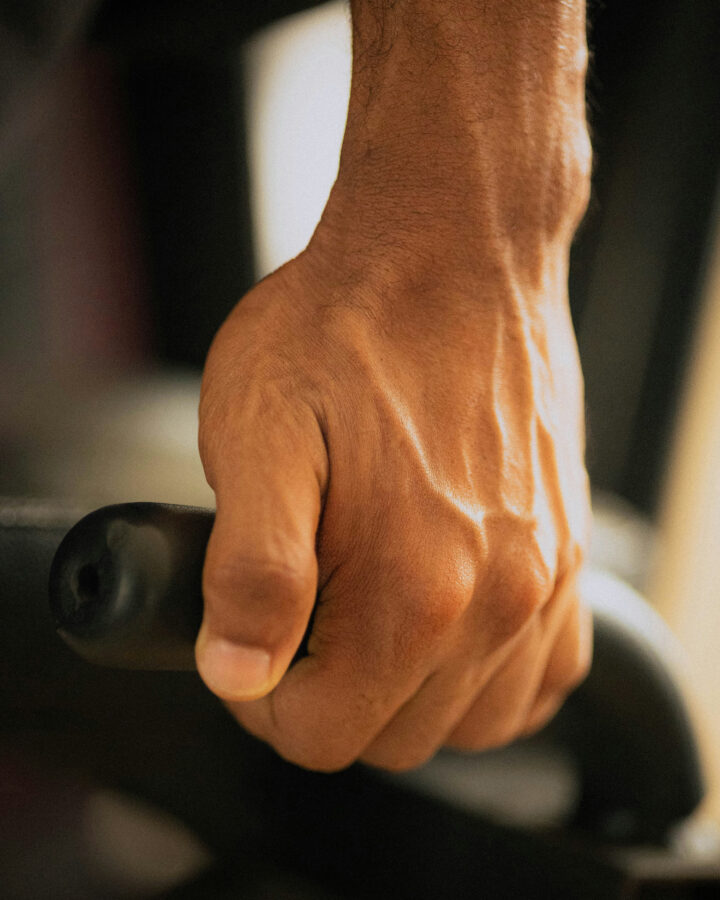
A landmark JAMA study just confirmed two physical tests that measure [lon-jev-i-tee]nounLiving a long life; influenced by genetics, environment, and lifestyle.Learn More: Longevity.
You may have heard that [grip strength]nounA key marker of strength and predictor of longevity.Learn More: Grip Strength predicts longevity. What you might not know is that most of the research behind that claim had a problem: it couldn’t fully separate strength from the fact that stronger people tend to move more, sit less, and have healthier hearts. But a new landmark study published in JAMA Network Open actually controlled for it, and grip strength still came out with a 33% lower mortality rate in the strongest versus the weakest group.
The finding is direct: women with greater muscle strength had significantly lower mortality over an eight-year follow-up, independent of how active they were, how fit they were, how much they sat, and even how inflamed their baseline biomarkers were. That’s not a proxy anymore. That’s an independent signal.
What a Study of 5,000 Women Found About Strength and Longevity
Led by Michael J. LaMonte, PhD, research professor of epidemiology and environmental health at the University at Buffalo, the study followed 5,472 women aged 63 to 99 for over 8 years. It measured strength two ways: grip strength using a hand dynamometer, and time to complete five consecutive sit-to-stand chair raises without using their arms.
The associations were striking. Women in the top quarter of grip strength (above 24 kg) had 33% lower mortality than women in the lowest quartile (under 14 kg), after controlling for age, body weight, comorbidities, physical activity, sedentary time, walking speed, and [in-fluh-mey-shuhn]nounYour body’s response to an illness, injury or something that doesn’t belong in your body (like germs or toxic chemicals).Learn More: Inflammation. The chair stand results tracked similarly: women who completed the five stands fastest had 34% lower mortality than the slowest group.
On whether body size explained the gap, LaMonte was direct: “We also showed that differences in body size did not explain the muscular strength relationship with death,” said LaMonte. “When we scaled the strength measures to body weight and even to lean body mass, there remained significantly lower mortality.”
Crucially, grip strength remained significantly associated with lower mortality even among women who weren’t meeting the standard aerobic activity guidelines of 150 minutes per week. Strength is associated with longevity benefit independent of cardio fitness. That distinction matters.
This Study Is More Rigorous Than Previous Strength Research
Most prior studies on strength and mortality relied on self-reported physical activity, which is notoriously incomplete, especially in older adults. This study used accelerometer data. At enrollment, they wore accelerometers for seven days to capture an objective baseline of their movement and sedentary time, data that was then tracked against mortality outcomes over the following eight years.
They also accounted for walking speed as a proxy for cardiovascular fitness and C-reactive protein as a marker of systemic inflammation, both independently associated with mortality. Strength still mattered after all of it.
There’s also a practical implication buried in the data. Women in the lowest grip strength quartile used walking aids at twice the rate of women in the highest quartile. “When we no longer can get out of the chair and move around, we are in trouble,” adds LaMonte.
Two Physical Tests That Predict Longevity
1) The Sit-to-Stand Test
Try the Sit-to-Stand Test. Start standing, cross your legs, and lower yourself to the floor without using your hands, knees, or forearms for support. Then stand back up the same way. You start with 10 points and subtract one for each time you use a support. A score of 8 or higher is the target. This version tests strength, balance, flexibility, and coordination all at once. If you have joint issues or haven’t been on the floor in a while, use a spotter and go easy the first time. Or, you can try the chair version used in the study. Sit in a standard chair with your arms crossed over your chest. Stand up and sit back down five times without using your hands. Time yourself. In the study, completing the five stands in 11.1 seconds or faster placed women in the highest-performing quartile.
2) The Grip Strength Check
A hand dynamometer, widely available online for under $30 and at many physical therapy offices, gives you a baseline reading. In the study, the highest-performing women averaged above 24 kg of grip force. A single number matters less than the trend: tracking it over time tells you whether you’re maintaining or losing ground.
Strength is independently worth tracking and building, at any age, regardless of how much cardio you’re getting. Two simple tests, both doable at home, both measurable in under two minutes.
Read this Next
The information provided in this article is for educational and informational purposes only and is not intended as health, medical, or financial advice. Do not use this information to diagnose or treat any health condition. Always consult a qualified healthcare provider regarding any questions you may have about a medical condition or health objectives. Read our disclaimers.
Written By:
